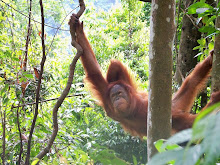
The Smithsonian has a new website dedicated to the "camera trap" photography being done during studies of wildlife all around the world - they have 201,000 photos arranged by species - you can look up your favorite animal and see it caught on "candid camera" ! Hope you enjoy this as much as we do at the Zoo!
Showing posts with label Of Interest. Show all posts
Showing posts with label Of Interest. Show all posts
March 25, 2011
Wild Animals Caught on Candid Camera!
The Smithsonian has a new website dedicated to the "camera trap" photography being done during studies of wildlife all around the world - they have 201,000 photos arranged by species - you can look up your favorite animal and see it caught on "candid camera" ! Hope you enjoy this as much as we do at the Zoo!

February 2, 2011
Alaska's Polar Bears Need Our Help!
Polar bears in the Hudson Bay are in danger of dying out completely as global warming melts away the ice they depend on to hunt for food.

At the southern edge of their range in the Hudson Bay, polar bears are losing weight and cubs are starving to death as global warming melts away their icy habitat. Each year, more and more polar bears die as their ice is destroyed by global warming pollution.
Compared to 20 years ago, there are now about 30 more days a year when the Bay isn't covered in ice, causing bears to spend nearly four weeks longer with nothing to eat -- and leaving the polar bears about 70 pounds thinner on average.
The approximately 900 polar bears in the western Hudson Bay are already in danger of dying out completely.
The polar bears further north in Alaska still have hope, but only if we reduce global warming pollution.
Take Action! Help protect Alaska's polar bears by sending a letter to members of Congress and President Obama, urging them to oppose big polluter plans to undermine the Clean Air Act. Click here to help in this letter writing.

At the southern edge of their range in the Hudson Bay, polar bears are losing weight and cubs are starving to death as global warming melts away their icy habitat. Each year, more and more polar bears die as their ice is destroyed by global warming pollution.
Compared to 20 years ago, there are now about 30 more days a year when the Bay isn't covered in ice, causing bears to spend nearly four weeks longer with nothing to eat -- and leaving the polar bears about 70 pounds thinner on average.
The approximately 900 polar bears in the western Hudson Bay are already in danger of dying out completely.
The polar bears further north in Alaska still have hope, but only if we reduce global warming pollution.
Take Action! Help protect Alaska's polar bears by sending a letter to members of Congress and President Obama, urging them to oppose big polluter plans to undermine the Clean Air Act. Click here to help in this letter writing.
November 29, 2010
Come see the Zoo at the 2010 Festival of Lights!
Join us for the 26th Annual Colorado Springs Festival of Lights

When: Saturday, December 4, 2010 at 5:50 p.m.
Where: The Festival of Lights Parade will start at 5:50 p.m. in downtown Colorado Springs at the corner of Tejon and St Vrain Street, and will proceed south on Tejon to Vermijo Avenue.
What: The Cheyenne Mountain Zoo is excited to again participate in this wonderful Colorado Springs tradition. Don't be late and keep your eyes open for the Zoo Mobile in the Festival of Lights!

When: Saturday, December 4, 2010 at 5:50 p.m.
Where: The Festival of Lights Parade will start at 5:50 p.m. in downtown Colorado Springs at the corner of Tejon and St Vrain Street, and will proceed south on Tejon to Vermijo Avenue.
What: The Cheyenne Mountain Zoo is excited to again participate in this wonderful Colorado Springs tradition. Don't be late and keep your eyes open for the Zoo Mobile in the Festival of Lights!
August 26, 2010
Cute Frog of the Week!

The Panama Amphibian Rescue and Conservation Project is excited to announce their new series “Cute Frog of the Week.” Check out 10 weeks of amazing amphibians!
So far they have highlighted the Ghost glass frog (Centrolene ilex), the African Bullfrog (Pyxicephalus adspersus), Ornate horned frog (Ceratophrys ornata) - pictured above - and the Tungara frog (Engystomops pustulosus).
Every week the Panama Amphibian Rescue and Conservation Project posts a new “cute frog” from somewhere in the world and includes an interesting, fun, and unique story, and photo. Be sure to check back every Monday for the latest addition of this online series.
June 4, 2010
Alligators Back for the Summer!
Welcome back alligators! Our 6 alligators have returned to the Cheyenne Mountain Zoo for the summer. They range from 4 feet to 8 feet long and come from the Colorado Gators Reptile Park, located near Alamosa, CO. They will be at the Zoo through the first week in September.

The American alligator is a rare success story of an endangered animal not only saved from extinction but now thriving. State and federal protections, habitat preservation efforts, and reduced demand for alligator products have improved the species' wild population to more than one million and growing today.
American alligators are found in the southeast United States. They live in freshwater environments, such as ponds, marshes, wetlands, rivers, lakes, and swamps.

Adult alligators are apex predators. Apex predators are predators that have virtually no predators of their own, and therefore they are residing at the top of their food chain. They feed mainly on fish, turtles, snakes, and small mammals.
One question we always get at the Zoo is “What is the difference between crocodiles and alligators?” Here are some fun facts to help differentiate the two:
1. Shape of snout: Alligators have a wider snout, rounder and more “U” shaped. Crocodile’s snouts are more slender like a “V.”
2. Jaw/teeth alignment: Alligators have a wider upper jaw that overlaps the lower jaw. Crocodile jaws are about the same width so their teeth lock together on the outside of their jaws.
3. Different scientific families: Alligatoridae are alligators and caimans, while Crocodylidae are crocodiles.
Check out National Geographic for more information about these amazing animals.
Below are some pictures of our President, Bob Chastain, Animal Manager, Jason Bredahl, keepers and staff from the Colorado Gator Reptile Park unloading the gators into their new summer home.
Come visit them soon! Located across from the elephants and just before you enter the “Australia” exhibit.


The American alligator is a rare success story of an endangered animal not only saved from extinction but now thriving. State and federal protections, habitat preservation efforts, and reduced demand for alligator products have improved the species' wild population to more than one million and growing today.
American alligators are found in the southeast United States. They live in freshwater environments, such as ponds, marshes, wetlands, rivers, lakes, and swamps.

Adult alligators are apex predators. Apex predators are predators that have virtually no predators of their own, and therefore they are residing at the top of their food chain. They feed mainly on fish, turtles, snakes, and small mammals.
One question we always get at the Zoo is “What is the difference between crocodiles and alligators?” Here are some fun facts to help differentiate the two:
1. Shape of snout: Alligators have a wider snout, rounder and more “U” shaped. Crocodile’s snouts are more slender like a “V.”
2. Jaw/teeth alignment: Alligators have a wider upper jaw that overlaps the lower jaw. Crocodile jaws are about the same width so their teeth lock together on the outside of their jaws.
3. Different scientific families: Alligatoridae are alligators and caimans, while Crocodylidae are crocodiles.
Check out National Geographic for more information about these amazing animals.
Below are some pictures of our President, Bob Chastain, Animal Manager, Jason Bredahl, keepers and staff from the Colorado Gator Reptile Park unloading the gators into their new summer home.
Come visit them soon! Located across from the elephants and just before you enter the “Australia” exhibit.


May 17, 2010
ENDANGERED SPECIES DAY at Cheyenne Mountain Zoo
Cheyenne Mountain Zoo will be observing Endangered Species Day on Friday, May 21, 2010 with some special presentations at select animal exhibits and habitats. They will lead up to the observance by highlighting different animal conservation programs each day of the week. These conservation programs are all included in the Zoo’s “Quarters for Conservation” initiative that Zoo guests support with 25 cent votes each time they visit. Most presentations run from 11 am to 2 pm, but it is suggested that guests get schedules at the Zoo front gate when they arrive.
The schedule for presentations during the week is:
Tues., May 18
Wild African Vultures
Wild Orangutans and Their Forest
Habitat / Palm Oil Education

Wed., May 19
Snow Leopards
Panama Amphibian Rescue Project

Thurs., May 20
Wild Amur Leopards
Wyoming Toads
Bat Conservation
Asiatic Bears
Mexican Grey Wolves
Fri., May 21
South African Foundation for the Conservation of Coastal Birds
Black-footed Ferrets

Endangered Species Day is an opportunity for people young and old to learn about the importance of protecting endangered species and everyday actions that people can take to help protect our nation’s disappearing wildlife and last remaining open space.
Protecting America’s wildlife and plants today is a legacy we leave to our children and grandchildren, so that all Americans can experience the rich variety of native species that help to define our nation.
Started by the United States Senate, Endangered Species Day is the third Friday in May. Every year, thousands of people throughout the country celebrate Endangered Species Day at parks, wildlife refuges, zoos, aquariums, botanical gardens, libraries, schools and community centers. Cheyenne Mountain Zoo is proud to be a part of this important observation.
The schedule for presentations during the week is:
Tues., May 18
Wild African Vultures
Wild Orangutans and Their Forest
Habitat / Palm Oil Education

Wed., May 19
Snow Leopards
Panama Amphibian Rescue Project

Thurs., May 20
Wild Amur Leopards
Wyoming Toads
Bat Conservation
Asiatic Bears
Mexican Grey Wolves
Fri., May 21
South African Foundation for the Conservation of Coastal Birds
Black-footed Ferrets

Endangered Species Day is an opportunity for people young and old to learn about the importance of protecting endangered species and everyday actions that people can take to help protect our nation’s disappearing wildlife and last remaining open space.
Protecting America’s wildlife and plants today is a legacy we leave to our children and grandchildren, so that all Americans can experience the rich variety of native species that help to define our nation.
Started by the United States Senate, Endangered Species Day is the third Friday in May. Every year, thousands of people throughout the country celebrate Endangered Species Day at parks, wildlife refuges, zoos, aquariums, botanical gardens, libraries, schools and community centers. Cheyenne Mountain Zoo is proud to be a part of this important observation.
April 13, 2010
Go WILD on your birthday at the Zoo!
Celebrate Your Birthday with the Zoo!
 Meet some of your favorite Zoo animals at your next birthday party! You and your party can choose to meet an animal up-close with the Beastly Animal Birthday Party, or simply visit the animals yourselves with the Create-Your-Own Zooper Party! You can also choose to spend the night at the Zoo with a WildNight Birthday Party, or even invite zoo animals to your birthday party at home with the ZOOMobile. No matter what you choose, your birthday celebration with the Cheyenne Mountain Zoo will make your party one to remember!
With these hassle-free parties at the Zoo, you just choose your party package, and we'll take care of all the details, including the Safari Cabin rental, goodie bags, drinks, party plates and utensils—and a carousel ride for you and your guests!
River Otter Party Package
Have you heard about our missing otter, Kitchi? We are now offering River Otters as a new animal theme! Have these playful, aquatic friends help you celebrate your party!
Primate Party Package
Take your party to the primates! This package includes a visit to the Monkey Pavilion for a primate training session, Zookeeper talk and to provide a special treat for the gibbons!
Pachyderm Party Package
Party with the pachyderms. When you choose this package, you'll visit either the elephants or the hippos and see an enrichment demonstration and Zookeeper talk.
 Giraffe Party Package
This exciting party includes a visit to the meerkats and world-famous giraffe herd in the African Rift Valley exhibit. Feed crackers to the giraffes and see the meerkats up close during a Zookeeper talk.
Pony Party Package*
Pony rides for all! This western-themed package includes a half hour of pony rides on two ponies picked especially for you—and help from a Cheyenne Mountain Zoo pony wrangler. Plus, the birthday boy or girl will receive a cowboy hat, and all cowpokes will get special badges and pictures to make the memories last a lifetime. *Additional fees apply for the Pony Party Package.
Packages Include:
•Zoo admission
•Safari Cabin rental for the party duration
•A carousel ride for the party group (weather permitting)
•An up-close meeting with a special animal
•A present for the birthday child
•Party favor bags with age-appropriate Zoo goodies
•Drinks
•Plates, cups, napkins, utensils and birthday candles
•Name tags
•A 25% discount at the Thundergod Gift Shop
Animal Presentations
During your party, your Zoo leader will bring out one animal for everyone to see in our new Education Loft! Although we cannot prearrange which animal you'll see, we can usually accommodate requests for "something fuzzy" or "something scaly". Party animals include the ferret, leopard gecko, pancake tortoise, California king snake and others.
Days & Times
Daily from 10:30 a.m. -12:30 p.m. or 2:30 p.m. - 4:30 p.m.
On your party day, your Zoo leader will meet your group at the admissions gate at your scheduled party time. To avoid waiting for latecomers, guests should arrive 15 minutes before the party start time.
For more information and costs please visit our website. To book your party e-mail or call 719-633-9925, ext. 127 TODAY!

HAPPY BIRTHDAY FROM CHEYENNE MOUNTAIN ZOO!
 Meet some of your favorite Zoo animals at your next birthday party! You and your party can choose to meet an animal up-close with the Beastly Animal Birthday Party, or simply visit the animals yourselves with the Create-Your-Own Zooper Party! You can also choose to spend the night at the Zoo with a WildNight Birthday Party, or even invite zoo animals to your birthday party at home with the ZOOMobile. No matter what you choose, your birthday celebration with the Cheyenne Mountain Zoo will make your party one to remember!
With these hassle-free parties at the Zoo, you just choose your party package, and we'll take care of all the details, including the Safari Cabin rental, goodie bags, drinks, party plates and utensils—and a carousel ride for you and your guests!
River Otter Party Package
Have you heard about our missing otter, Kitchi? We are now offering River Otters as a new animal theme! Have these playful, aquatic friends help you celebrate your party!
Primate Party Package
Take your party to the primates! This package includes a visit to the Monkey Pavilion for a primate training session, Zookeeper talk and to provide a special treat for the gibbons!
Pachyderm Party Package
Party with the pachyderms. When you choose this package, you'll visit either the elephants or the hippos and see an enrichment demonstration and Zookeeper talk.
 Giraffe Party Package
This exciting party includes a visit to the meerkats and world-famous giraffe herd in the African Rift Valley exhibit. Feed crackers to the giraffes and see the meerkats up close during a Zookeeper talk.
Pony Party Package*
Pony rides for all! This western-themed package includes a half hour of pony rides on two ponies picked especially for you—and help from a Cheyenne Mountain Zoo pony wrangler. Plus, the birthday boy or girl will receive a cowboy hat, and all cowpokes will get special badges and pictures to make the memories last a lifetime. *Additional fees apply for the Pony Party Package.
Packages Include:
•Zoo admission
•Safari Cabin rental for the party duration
•A carousel ride for the party group (weather permitting)
•An up-close meeting with a special animal
•A present for the birthday child
•Party favor bags with age-appropriate Zoo goodies
•Drinks
•Plates, cups, napkins, utensils and birthday candles
•Name tags
•A 25% discount at the Thundergod Gift Shop
Animal Presentations
During your party, your Zoo leader will bring out one animal for everyone to see in our new Education Loft! Although we cannot prearrange which animal you'll see, we can usually accommodate requests for "something fuzzy" or "something scaly". Party animals include the ferret, leopard gecko, pancake tortoise, California king snake and others.
Days & Times
Daily from 10:30 a.m. -12:30 p.m. or 2:30 p.m. - 4:30 p.m.
On your party day, your Zoo leader will meet your group at the admissions gate at your scheduled party time. To avoid waiting for latecomers, guests should arrive 15 minutes before the party start time.
For more information and costs please visit our website. To book your party e-mail or call 719-633-9925, ext. 127 TODAY!

HAPPY BIRTHDAY FROM CHEYENNE MOUNTAIN ZOO!
April 7, 2010
Spring Break Camp Huge Success! COMING SOON…SUMMER CAMP!

Spring is definitely here in Colorado! Birds are singing, flowers are blooming, and we are only getting small snow storms instead of the BIG ones we saw through the winter…except those two we had over Spring Break! Regardless, Spring Break at Cheyenne Mountain Zoo was a huge success. We had a great turn-out for our spring camp this year! Two programs were offered during the week – Predators for ages 6-10 and Jr. Zookeeper for ages 10-15. Over the week, our little “predators” learned about different hunters from big cats to birds of prey. We also made plaster tracks to see how the paw prints differ for various predators. The Jr. Zookeepers were busy learning how to take care of aquariums, making diets (diets are meals with healthy nutrients and vitamins for the animals) in the Loft and talking to almost all of the zookeepers in the Zoo!

SUMMER CAMP 2010
Register Your Wild Ones.
(Ages 4-15)
Summer 2010 Camp registration is open!
Save 10% per additional regular full day camps when you sign up for two or more!
A Wild Summer Experience.
Cheyenne Mountain Zoo offers summer camp adventures that share the wonders of wildlife and wild places in fun and exciting ways. Campers meet animals up close, explore the outdoors, interact with zookeepers, make treats for the animals, design cool crafts, and more!
Camp Options (see camp details online):
Full Day Camp (with or without an overnight)
Night Camp
Half Day Camp
Two Week Camp
Special Day Camps
Extended Care
Scholarships
Help a child attend a Cheyenne Mountain Zoo camp by making a donation of $5 or more. Simply note your donation on your registration form—and make a child's camp wishes come true. Application deadline for Summer Scholarship Form submission is May 1, 2010.
Special thanks to Olde World Bagel!
Special thanks to our summer camp sponsor, Olde World Bagels & Deli, each overnight program concludes with a delicious breakfast!

April 6, 2010
Why Would We Be Bowling For Rhinos?
Because we LOVE rhinos!
 What is Bowling for Rhinos?
Each year the American Association of Zoo Keepers (AAZK) sponsors a fundraising bowl-a-thon called Bowling for Rhinos. Since its beginning in 1990, Bowling for Rhinos has raised $3.5 million for wild rhino conservation. 100% of the funds raised from the event go toward protecting the world’s remaining 24,500 rhinos.
In Kenya we support the Lewa Wildlife Conservancy where our donations help protect both black and white rhinos. In Indonesia we help protect the remaining Javan rhinos at Ujung Kulon National Park and the Sumatran rhinos in Bukit Barisan Selatan and Way Kambas National Parks.
 Cheyenne Mountain Zoo’s chapter of AAZK has been an active participant in Bowling for Rhinos for several years, raising over $25,000 to date. With your help, we can continue to help protect these amazing animals! (Photo left: Mom and baby black rhino.)
Why Save the Rhinos?
Only 5 rhino species exist today when once there were over 100 distinct species. The 5 remaining species – White, Black, Indian, Sumatran and Javan – are all critically endangered and are being heavily poached for their horns, which are used as dagger handles and for Oriental medicines.
Rhinos are a keystone species:
•They are mainly browsers, keeping shrubs and bushes in check by pruning them.
•They dig up roots with their horns during feeding, exposing their tender shoots for smaller herbivores to feed on.
•They disrupt the soil, which allows for easier seed germination.
•They fertilize the land with their dung and help spread seeds.
•Their skin harbors parasites, which provide food for birds.
By protecting rhinos, we save large expanses of habitat. Saving these habitats protect many other endangered species as well as rhinos.
 What is AAZK?
AAZK is a national professional association of zookeepers and other individuals interested in conservation locally and internationally. Cheyenne Mountain Zoo’s chapter raises money through fundraising events to buy enrichment for the Zoo’s animals, provide professional development opportunities for Animal Staff, and to support conservation organizations that protect animals and habitat.
(Photo right: Baby white rhino).
BOWLING DETAILS:
Come show off your awesome bowling skills, how great you look in those shoes, and HELP US SAVE RHINOS!
PRIZES, RAFFLES, ANIMALS FROM THE ZOO and MORE!
Saturday, May 8, 2010, 6-8 p.m.
Brunswick Zone, 999 N. Circle Drive
Cost: $10 per bowler + sponsor dollars
All are welcome but you must pre-register to bowl. Visit online (click Upcoming Events and Happenings) or call 719-633-9925 x133.
Visit our Facebook page for FUN rhino trivia every Wednesday and all throughout the week of May 3, 2010.

(Photo above:Indian rhinos.)
 What is Bowling for Rhinos?
Each year the American Association of Zoo Keepers (AAZK) sponsors a fundraising bowl-a-thon called Bowling for Rhinos. Since its beginning in 1990, Bowling for Rhinos has raised $3.5 million for wild rhino conservation. 100% of the funds raised from the event go toward protecting the world’s remaining 24,500 rhinos.
In Kenya we support the Lewa Wildlife Conservancy where our donations help protect both black and white rhinos. In Indonesia we help protect the remaining Javan rhinos at Ujung Kulon National Park and the Sumatran rhinos in Bukit Barisan Selatan and Way Kambas National Parks.
 Cheyenne Mountain Zoo’s chapter of AAZK has been an active participant in Bowling for Rhinos for several years, raising over $25,000 to date. With your help, we can continue to help protect these amazing animals! (Photo left: Mom and baby black rhino.)
Why Save the Rhinos?
Only 5 rhino species exist today when once there were over 100 distinct species. The 5 remaining species – White, Black, Indian, Sumatran and Javan – are all critically endangered and are being heavily poached for their horns, which are used as dagger handles and for Oriental medicines.
Rhinos are a keystone species:
•They are mainly browsers, keeping shrubs and bushes in check by pruning them.
•They dig up roots with their horns during feeding, exposing their tender shoots for smaller herbivores to feed on.
•They disrupt the soil, which allows for easier seed germination.
•They fertilize the land with their dung and help spread seeds.
•Their skin harbors parasites, which provide food for birds.
By protecting rhinos, we save large expanses of habitat. Saving these habitats protect many other endangered species as well as rhinos.
 What is AAZK?
AAZK is a national professional association of zookeepers and other individuals interested in conservation locally and internationally. Cheyenne Mountain Zoo’s chapter raises money through fundraising events to buy enrichment for the Zoo’s animals, provide professional development opportunities for Animal Staff, and to support conservation organizations that protect animals and habitat.
(Photo right: Baby white rhino).
BOWLING DETAILS:
Come show off your awesome bowling skills, how great you look in those shoes, and HELP US SAVE RHINOS!
PRIZES, RAFFLES, ANIMALS FROM THE ZOO and MORE!
Saturday, May 8, 2010, 6-8 p.m.
Brunswick Zone, 999 N. Circle Drive
Cost: $10 per bowler + sponsor dollars
All are welcome but you must pre-register to bowl. Visit online (click Upcoming Events and Happenings) or call 719-633-9925 x133.
Visit our Facebook page for FUN rhino trivia every Wednesday and all throughout the week of May 3, 2010.

(Photo above:Indian rhinos.)
April 4, 2010
Bird-watching Hike on Sunday, April 18th

Welcome the annual return of Colorado’s Turkey Vulture and other migratory birds! Join Jenyva Turner, Cheyenne Mountain Zoo (CMZ) zookeeper and vulture enthusiast, on a bird-watching hike in Cheyenne Mountain State Park, Sunday, April 18, from 8-11am.This hike is FREE courtesy of Cheyenne Mountain Zoo's Quarters for Conservation program.
Hike Description: We will stroll along spring wildflowers, prairie dogs and bluebirds and gradually wind up to scrub oak where we may find towhees and jays. Our hike ends in the Douglas fir/Ponderosa pine habitat of tanagers, nuthatches, warblers and hummingbirds. Great views of the prairie below will provide excellent views of turkey vultures and other raptors. Meet at 8am in the trailhead parking lot (1st left turn after passing the Visitor Center). Total length: 3 miles. Elevation gain: About 600 feet. More details...
 To sign-up for this hike please email Jenyva with your details at jturner@cmzoo.org.
 Vulture Action Items:
• Get to know our local vultures! Buy some binoculars and become a bird watcher!
• Protect wildlife habitat by getting involved in your local parks, open spaces and sustainable conservation groups. Visit websites from the following groups:
Sierra Club
Trails and Open Space Coalition
Wild Connections
Wildlands Restoration Volunteers
Rocky Mountain Institute
Catamount Institute
•Keep garbage cleaned up to prevent vultures and other wildlife from eating non-food items.
•Report roadkill so authorities can safely remove it. This will protect scavengers, like vultures, from injury or death. Along roads in Colorado Springs call: 719-385-5934. On El Paso County roads call: 719-520-6460. On Colorado state roads call: 719-576-1868.
•Do not leave animal carcasses killed with lead shot lying around; use an alternative type of shot.
•Avoid the use of poisons to kill wildlife.
•Recycle paper and buy recycled products to reduce the need to cut down trees that vultures roost in.
•Vote with your tokens and donate your quarters to vulture conservation at Cheyenne Mountain Zoo’s Quarters for Conservation display.
April 3, 2010
Grizzly Grill …NOW serving you!

Cheyenne Mountain Zoo announces that the Grizzly Grill is officially OPEN!
The exciting new restaurant, managed by Todd Langfield of Service Systems Associates (SSA), offers Zoo guests a unique dining experience while overlooking the city of Colorado Springs and surrounding region. With abundant indoor air-conditioned seating and beautiful new sunlit patios, the Grizzly Grill is a great place for Zoo guests to relax and take a break from their journey around America’s mountain Zoo.
 Grizzly Grill's new gourmet cuisine menu was created by this year’s Chefs Gala “Best of Show” winner Chef Beau Green. The menu has been expanded with selections that guests might not expect to see in a Zoo setting. Delicious offerings such as fresh salads, wraps, Asian rice bowls, pasta dishes, brick oven pizza by-the-slice, a carving station with daily specials, hearty grill items such as the 1/3-pound Angus beef burger baskets and delectable dessert offerings including Island Oasis fruit smoothies are now featured. Diners also enjoy “Culinary Theatre” as you watch your food selections prepared fresh in front of you. Hours of Operation are 10 a.m. – Zoo close daily, and it is located near the middle of the Zoo, adjacent to the Carousel. You can't miss it!
Grizzly Grill dining area features bar style and regular tables overlooking the city. The views are unbelievable!

Easy access stations feature a variety of mouth-watering options, with digital menus above each station.
April 2, 2010
Baby Giraffe Born at the Zoo...make that TWO!
The baby giraffe calves who were born at Cheyenne Mountain Zoo on consecutive days, Tuesday and Wednesday, March 23 and 24, 2010, are doing great. These are two of the three anticipated births this spring from the Zoo’s renowned giraffe herd. The two young giraffes, both male calves, have been nursing really well from their mothers and both are in good health after having their first neo-natal examinations on March 26, 2010.
The boys were introduced to each other and a few other adult giraffes on Tuesday, March 30. They had a wonderful time getting to know on another, and they both attempted to nurse off of any “big” giraffe who walked by. Watch the video below for a behind the scenes look at the babies since they were born.
Follow this story and more on our Facebook fan page.
The boys were introduced to each other and a few other adult giraffes on Tuesday, March 30. They had a wonderful time getting to know on another, and they both attempted to nurse off of any “big” giraffe who walked by. Watch the video below for a behind the scenes look at the babies since they were born.
Follow this story and more on our Facebook fan page.
April 1, 2010
Budgie Buddies Open TOMORROW…

Fan Photo by Ali Leaver
There's a whole lot of shaking going on in the Budgie Buddies exhibit as the Budgies take flight again tomorrow, Friday, April 2! Take a stroll through our indoor aviary surrounded by hundreds of free-flight Australian budgies, Australian finches, cockatiels and princess parrots. Give your seed stick a shake, and a bird or two may even land on your arm or shoulder to have a nibble. Or, try out the new Zoo Grass! The budgies are lovin' this organic homegrown wheatgrass. You could even take some Zoo Grass home for your own pets!
What is a Budgie anyway?
Budgies, or budgerigars, are brightly-colored Australian birds that eat seeds. They are also known as parakeets here in the United States, but in the wilds of Australia these indigenous birds are everywhere. They do not occur naturally anywhere else in the world.

Budgies are very intelligent and adaptable birds. They are highly active birds and love to play with toys. Budgies are hookbills and crack open their seed to eat so they do not need grit as many of the older bird books write. Grit is made primarily from ground up minerals and sand. The purpose of grit is thought to help birds grind up difficult to digest items. By grinding, it is thought that these food items become better utilized by the bird. Since grit is mostly undigestible material, it will stay in the ventriculus, or gizzard, for months to years until it is passed in the stool. Grit is needed only by softbills such as canaries and finches.

What is Zoo Grass?
 Zoo Grass is available seasonally at Budgies, and will also be back TOMORROW, Friday, April 2. You can take Zoo grass home for your own pets as well. It's a great way to interact with your animals (birds, cats, dogs and reptiles) at home using organic, non-toxic, conservation-minded fun! Even the container is 100% biodegradable made from straw and cocoa fibers. (So, please complete the cycle and dispose of the container in an earth-friendly way! You can compost it or simply bury it in your yard, where it will enrich your existing garden soil.) Shipping is not available for Zoo Grass as it is a perishable product. Additional Zoo Grass may be purchased at Thundergod Snack and Gift shop during regular business hours. Proceeds from Zoo Grass help support CMZoo Horticulture.
Cost
Seed sticks are $1 each
Zoo Grass is $3 per 3"square container
Budgie Fan Photo above by Andrea Linden. Share your photos with us too on our Facebook page.

Wild Budgie Flock
March 26, 2010
Snow Leopard Update

On March 3, 2010 our own Megan Sanders received an update from the Snow Leopard Trust letting us know that they just collared a brand new male Snow Leopard near the research camp! They are hoping to collar a female this year but this male looks like he may be young and in great shape. This is VERY EXCITING!!! He is known as M7 on the GPS maps.

The latest update from Jennifer Snell Rullman, Conservation Program Director at the Snow Leopard Trust (SLT) is as follows:
Update for March 15–19, 2010:
After several weeks of only hearing from one or two cats, we have recent location uplinks from four of the five collared snow leopards. Perhaps one of the most remarkable journeys depicted by this data is that of our newest cat we call M7. He is a real mover! He was fitted with his collar on February 16th and almost immediately took off on a NE path covering over 30 km in less than a week across extremely rugged terrain (meaning he may have had to walk up to 60 km from point to point when considering the actual terrain). This week was no different. After apparently hunting on the April 7th he stayed there until the 10th before moving further north. Once he hit the edge of the mountain range he was faced with a vast expanse of steppe/desert in front of him. He opted to turn back to the SW, nearly following in his own footsteps, until he reached and area we call “the badlands.” At this point it is very possible that he skirted this area, as the badlands is an area of low-lying sandstone-like formations we consider to be unsuitable snow leopard habitat (both Itgel and Saikhan have come close to, but seemingly avoided, the badlands as well). He finally turned again, walking back to the SE, covering more than 30 km in just two days. This lengthy and rapid movement pattern is similar to what Aztai exhibited in his initial days after collaring.
Three locations were received from Shonkhor, who appears to have set off on yet another one of his trademark expeditions. He has crossed the wide valley separating Toson Bumba and Tost mountains, and based on the uplink from him on the 12th of March, was near the south-western edge of Aztai's home range.
In contrast to M7 and Shonkhor’s long treks, Aztai continued patrolling the core of his home range.
Orjan also managed to replace Tsagaan's collar, which was running low on batteries, on the 12th of March when he was caught less than 200 m from the camp. Tsagaan seems to have grown in size since he was last caught. He now weighs 44.5 kg and his body length has increased by 4 cm, making him 124 cm long. Unfortunately, since his successful release we have not heard from the collar and so we are waiting to see if there is a malfunction with the collar or if he is holed up in an area where the signal can not reach the satellite. But as each day goes by we are more concerned that the collar has failed to turn on. Hopefully we will hear from his collar soon and then Orjan will head towards the Toson Bumba range where he will focus on replacing Shonkhor's collar and hopefully catching a female leopard. Given our capture history (5 males have collars on today); it is no exaggeration to say that catching a female will be more than welcome!
Below is the latest GPS map uplink from SLT. “The new collared cat (in blue) is truckin!!” said Megan Sanders when she saw the map.

We are hoping to get updates from Jennifer bi-monthly after April and we will keep you updated as we hear news from SLT. Stay tuned!

March 25, 2010
Pawnee Montane Skipper Butterfly Conservation

What is a Pawnee Montane Skipper you ask?
This butterfly is native to only one area of the Colorado Front Range. Its habitat is southwest of Denver, where the South Platte River drainage meets up with its north fork. It tends to inhabit dry, open Ponderosa Pine woodland with sparse groundcover at 6,000-7,500 feet. As of right now, it only has 37.9 square miles to call its home as noted by the Denver Water Department. This species’ roaming area was bigger in the 60’s and 70’s, but with the advancement of housing developments and the expansion of Denver’s boundaries, the skipper has lost its range and some of its food sources.
In June of 2002, the Hayman Wildfires charred 138,000 acres of land. This resulted in a 40% decrease in the skipper’s habitat. Two previous fires in 1996 and 2000, Buffalo Creek and Hi Meadow, wiped out an additional 10% of skipper habitat.
The skipper is classified as a federally threatened species. The recovery plan for the Pawnee Montane Skipper was placed into effect on September 2, 1998. The recovery plan includes monitoring its habitat and removal of less than 5% loss of skipper’s habitat to developments such as roads, housing, or recreational and a heavy planting project of the Blue Grama Grass and Prairie Blazing Star. Along with the planting of feeding plants, the project is also aimed at eradicating noxious weeds like Mullen, Knapweed, Russian and Canadian Thistle, Hound’s tongue, or any other noxious plant that will compete with the skipper’s nutrient plants.
While the Pawnee Montane Skipper Conservation effort will continue to receive basic ongoing support from the CMZ Conservation Fund, we still need your volunteer support with “boots on the ground” habitat restoration. To register, go to http://www.rmfi.org/contact.
In addition, there is another way that you can help. Local artist Carol Overbeck is designing and making jewelry featuring our local butterflies. The profits will go directly toward research and habitat restoration for the Pawnee Montane Skipper. If you want to make a difference for local conservation, these opportunities are for you. Please check out the Cheyenne Mountain Zoo website for details and future updates.


March 23, 2010
Endangered Species Day Art Contest

The nationwide Endangered Species Day Art contest provides students with an opportunity to learn about endangered species and express their knowledge and support through artwork. The contest is organized by the U.S. Fish and Wildlife Service, the Endangered Species Coalition, the Association of Zoos and Aquariums and the Ogden Museum of Southern Art/ University of New Orleans.
Subject Matter
Artwork should highlight one or more land- and/or ocean-dwelling endangered species—mammal, reptile, amphibian, bird, fish, plant, and/or invertebrate (e.g., insect, spider, snail, coral, crustacean or clam)—found in the United States. Entrants are encouraged to depict species that are found in their region. Entrants may wish to choose from the U.S. Fish and Wildlife Service’s Spotlight Species.
(See a list of all endangered species here.)
Judging
Winners will be chosen in four categories: K-Grade 2, Grades 3-6, Grades 7-9, Grades 10-12. From these, one national winner will be selected in 2010. Contest entries will be evaluated by a prestigious panel of judges, including artists and conservationists. Initial judging will be conducted by the Ogden Museum of Southern Art, a Smithsonian Affiliate.
Prizes
The contest’s grand prize winner will be honored with a special trophy designed by a gifted young artist, Meredith Graf of New Orleans, LA. The winner’s name will be engraved on the trophy’s base, which will be displayed in Washington, DC. The national winner will receive a round-trip flight to Washington, D.C. for him/herself and one guardian to attend a reception. Accommodations will also be provided. Prize is not redeemable for cash. All other expenses are the responsibility of the winner. Winners must be available for travel sometime in May. In addition, an exhibition of the students’ artwork and other promotions are planned.
The deadline for submission is March 26, 2010. See all the entry requirements and get your entry form.
For more details on the contest and general Endangered Species Day information, log on to www.endangeredspeciesday.org
SNEAK PREVIEW: Petrie Takes Flight in African Rift Valley’s “Wings of Africa”
Cheyenne Mountain Zoo's "Wings of Africa" bird show will be soaring to new heights with Petrie, the Abyssinian ground hornbill. You may have seen Petrie in years past engaging guests before and after the show on a keeper's arm. Well, Petrie has honed his flying skills over the last year and will make his free flight debut this May. Abyssinian ground hornbills spend much of their time on the ground searching for food, hence where their name comes from. Although they spend so much time on the ground, they are excellent flyers with an impressive wing span of up to six feet. Their feathers are mostly black but they have white flight feathers that are usually only seen when the birds are in flight. Keep your eyes open this summer for Petrie and all the birds of the African Rift Valley as they show you some of their unique natural behaviors in the "Wings of Africa" bird show.
Check out a sneak preview HERE.
Check out a sneak preview HERE.
March 22, 2010
Your Spring Break “Daycation” is Just a Short Drive Away!

From March 22 through March 26, Cheyenne Mountain Zoo will be rolling out all of its best fun and excitement for this year’s Spring Break celebration. Since school is out for many Colorado cities this week, we want to accommodate your family with a day of activities and animal fun. It’s truly a “daycation,” just a short drive from anywhere in the Pikes Peak region! Cheyenne Mountain Zoo invites everyone to America’s mountain Zoo to enjoy the sights and sounds of Spring Break with our renowned animal behavior shows, demos and special activities highlighted throughout the week. Check out the special schedule of Animal Happenings here!
Today’s Spring Break Giveaway of the Day is as follows:
• VISIT US ON FACEBOOK TODAY to receive a coupon for a FREE carousel ride between 10 – 11 a.m. Print out the coupon and bring it with you to the front entry for a free carousel ride ticket only between the hours of 10 – 11 a.m. Coupon must be redeemed at time of admission and must be used on Monday, March 22, 2010.
March 21, 2010
TODAY KICKS OFF SPRING BREAK GIVEAWAY DAYS!
 It’s finally here…the day all school aged people wait for…SPRING BREAK! What better way to celebrate than with daily giveaways and GREAT prizes from Cheyenne Mountain Zoo?!
Visit the Zoo everyday this week for amazing Animal Shows. Click here to see the schedule.
Here’s how you can participate and WIN in Spring Break Giveaway Days…
Everyday giveaways ALL WEEK LONG:
• Comment on our blog any day this week for your chance to win 2 FREE Sky Ride passes! Blog comments must be unique and only one entry per person, per day will be entered. Winners will be chosen randomly and notified directly all week long.
• Win a Run to the Shrine t-shirt by being a blog follower, a facebook fan or twitter follower! Five winners will be chosen at random from all followers and fans during the week!
TODAY’S GIVEAWAY, Sunday, March 21, 2010
You will be entered to win a Run to the Shrine race registration valued at $30, a Run to the Shrine t-shirt, and 2 FREE Sky Ride passes by helping us get to 3,500 fans on facebook by April 1. Post this on your facebook page to be entered: “Become a fan of Cheyenne Mountain Zoo and you will be entered to win GREAT prizes all week long during our Spring Break Giveaway JUST FOR BEING A FAN. Re-post this message for your chance to win.”
Check our facebook, twitter and blog everyday to find more ways to WIN and SAVE at the Zoo!

March 18, 2010
Grand Opening of the NEW Front Entry
The Grand Opening celebration included a special ribbon cutting ceremony and a visit from two of the Zoo’s special animal ambassadors, Amiga the Shetland pony, and Nyota, our Nigerian dwarf goat.
The new area includes seven gates with new digital technology for easier access to the Zoo. With the new admission gates complex, the admission improvements give the Zoo the opportunity to be more efficient and guest friendly, whether selling a non-member a ticket or whisking an existing member through a “member’s only” gate. The new admission area will now streamline the front end of guest’s Zoo visits, giving them more time on Zoo grounds with family and friends.
Each of the first 100 Zoo guests to arrive this morning were entered into a drawing to win a Behind-the-Scenes Zoo encounter with their choice of the Zoo’s Grizzly Bears, Hippos, or Elephants. Congratulations to the Rash Family who won! They will choose which experience they would like to do with a total of 9 friends. (A value of $250).
Our winners!

The new area includes seven gates with new digital technology for easier access to the Zoo. With the new admission gates complex, the admission improvements give the Zoo the opportunity to be more efficient and guest friendly, whether selling a non-member a ticket or whisking an existing member through a “member’s only” gate. The new admission area will now streamline the front end of guest’s Zoo visits, giving them more time on Zoo grounds with family and friends.
Each of the first 100 Zoo guests to arrive this morning were entered into a drawing to win a Behind-the-Scenes Zoo encounter with their choice of the Zoo’s Grizzly Bears, Hippos, or Elephants. Congratulations to the Rash Family who won! They will choose which experience they would like to do with a total of 9 friends. (A value of $250).
Our winners!

Subscribe to:
Posts (Atom)

 Posts
Posts