Welcome to Cheyenne Mountain Zoo’s official blog! From amazing animal stories to a "behind the scenes" look at daily zoo life, this is the place to get to know
Cheyenne Mountain Zoo on a more personal level.
Check back often to get In Between the Spots!
Showing posts with label Endangered Species. Show all posts

February 8, 2011

Rare Ocelot Observed in Southern Arizona

We just received some exciting news from our friends at the Arizona Game and Fish Department and wanted to share it. See the story below.

February 8, 2011

PHOENIX – Arizona Game and Fish Department officials report that a rare ocelot was observed this morning (Feb. 8) in the Huachuca Mountains in southern Arizona.

An individual called Game and Fish this morning to report that while he was working in his yard in the Huachuca Mountains, his dogs began barking at a cat-like animal which quickly climbed a tree. The individual drew closer and suspected that the small spotted cat might be an ocelot. An ocelot is a rare and endangered species of cat.


The man called Game and Fish and an officer responded to the site and confirmed that it was, in fact, an ocelot. The officer did a non-intrusive, visual inspection of the animal from the ground near the tree, and the animal appeared to be healthy. There was no indication that there had been any dog-to-cat direct interaction, as no wounds were visible on any animal.

As with all wildlife-human interaction cases, photos were taken of the animal (attached). The officer was also able to retrieve some scat samples from the scene.

Once the final confirmation was determined, the officer directed that all humans and dogs retreat from the area, and the ocelot, apparently unharmed, was allowed to go on his way.

Ocelots are small to medium-sized spotted cats with a long tail. These cats have been listed as endangered since 1982 under the Federal Endangered Species Act. Since being listed, ocelots have only rarely been seen in Arizona. Only one other ocelot, an animal run over near Globe in April 2010, has been confirmed in Arizona since the mid 1960s. One other ocelot was reportedly captured on film by the Sky Island Alliance in November of 2009; however, it has not been possible to fully verify the species or the animal’s origin based on that photo.

Ocelots tend to be smaller in size in the more northerly portions of their habitat range than those individuals in the central or southern habitat areas. The upper body coloring is highly variable, ranging from grayish to cinnamon or tawny to reddish brown. Dark markings form chainlike streaks down the sides of the ocelot’s body. They have a long, curling, ringed tail that wraps around limbs for stability and is very indicative of the species.

The present range for ocelots is in the eastern and western lowlands of Mexico, from southern Mexico through Central America and in the lowland areas of Colombia, Ecuador, Peru and Brazil. On the fringes of their range, they occupy a very limited region in both the United States (a remnant population exists in Southern Texas) and Argentina. And now Arizona can be included in that range. Other animals such as bobcats and young mountain lions are sometimes misidentified as ocelots, which is why verification is so very important.

Arizona Game and Fish will work together with the U. S. Fish and Wildlife Service to review materials from the site and the photos to attempt to determine whether or not this was a naturally occurring ocelot. Some ocelots are known to be kept as pets, and occasionally, individual animals escape or are released into the wild.

Ocelots are protected by the Endangered Species Act and should be left alone. If anyone encounters a cat believed to be an ocelot, we would request that all sightings and photos along with observation information be reported immediately to the department. More information and additional photos will be made available Wednesday, visit www.azgfd.gov for details.

December 23, 2010

New Mexican Gray Wolf...the Introduction

The two Mexican gray wolves were introduced for the first time earlier this month and it went GREAT! They follow each other around, lots of prancing and play-bowing. Also calmly standing together looking in the same direction "on alert." The new female "Weeko" is from California, she first started to explore the exhibit by herself a few days before the introduction. She was staying towards the top of the exhibit when by herself. As soon as they were together she seemed comfortable going where ever Masadi would go.

December 21, 2010

Meet the Penguins at the Cheyenne Mountain Zoo

Most of you know Skipper, Kowalski, Rico and Private, four cute penguins living in the Central Park Zoo, who were made famous by Dreamwork’s Madagascar movie in 2008. These penguins have created quite a name for themselves and they even have their own show on Nick.


Cute and cuddly…that's exactly what they want people to think. Why? Because this 4-some of placid-looking penguins are actually an elite strike force with unmatched commando skills and a secret headquarters. Their mission? To maintain order in the zoo!

We have our own elite force at the Cheyenne Mountain Zoo! Instead of just 4, we have 11 “cute and cuddly” African penguins that can be seen daily in the Aquatics building.

Roxanna Breitigan, Animal Care Manager and our own African Penguin Quarters for Conservation champion, called these little guys “the ultimate hoarders” at the Zoo.


Sobe, male, 12 years old
Sprocket, male, 12 years old
Murphy, female, 16 years old
Jess, female, 30 years old
Mogley, female, 10 years old
Fudge, female, 24 years old
Colorado, male, 17 years old
Sally, female, 10 years old
Decker, female, 12 years old
Tasselhoff, male, 10 years old
Joe, male, 12 years old


They all have different personalities and behaviors, but the keepers and staff tell them apart by the colored bands that are on each penguin’s leg.

Size: 23-25 inches tall; 5-9 pounds
Diet: Small fishes, such as pilchard, anchovies, horse mackerel and sardines
Range: Africa’s coastal waters and islands, from Namibia through South Africa

Habitat
The Southern coast of Africa is where you will find the majority of the African Penguins. There are 24 known colonies of them around this continent. There is no place else on Earth where this species of penguin is found in the wild.

Predators
Sharks and fur seals hunt penguins in the water. Seagulls, mongoose and cats prey on nesting penguins and their offspring.
Due to the unique patterns of black and white, the African Penguin is less likely to be found by predators in the water during their own hunting efforts. The dark back makes it difficult for birds of prey to see them from above while they are swimming, and the white underbelly prevents water predators from easily seeing them from below.

Relatives

There are 18 penguin species. African penguins are closely related to the Humboldt, Galapagos and Magellanic penguins.

Reproduction
The African Penguin do not have a set breeding season, however, the majority of their breeding takes place in early February.

Family Life
African penguins breed in huge, noisy colonies. They lay two eggs in
burrows, bowl-shaped depressions dug in the sand, which protect the eggs from
the sun. Like all penguins, they form tight pair bonds, and both parents incubate
the eggs and feed the chicks for 2-4 months.

Vocalization
African penguins are also known as jackass penguins, because they make a
sound that is very similar to a donkey's bray. They make this sound in order to interact and communicate with other members of their colony. Watch a video below of our penguins vocalizing.


African Penguin Conservation

African penguins are in danger of extinction. Major reasons include depletion of their food from overfishing, climate change and pollution from incidences such as oil spills.

The South African Foundation for the Conservation of Coastal Birds (SANCCOB) works to protect and rehabilitate South Africa’s seabird populations. Quarters for Conservation funds support their efforts to rescue, hand raise and release orphaned and abandoned chicks back into the wild. Learn more at www.Sanccob.co.za.

It is estimated that the African Penguin can live 10-15 years in the wild (they can live up to 30 years old in captivity). This isn’t very long given that they don’t mature sexually until they are from 2-4 years of age. In the past 35 years the number of them has dropped from 1.5 million to less than 150,000.

In Africa, the eggs from these penguins are a very common source of food. Due to many people living in poverty in this area there aren’t any controlled efforts or laws prohibiting it. As a result many of the eggs are removed before they have the chance for the young to develop.

Another problem is that their natural habitat continues to be destroyed. More than 19,000 of these penguins were killed due to an oil spill in 2000.

Do You Love Our Penguins?

Get involved by voting for Penguins in our Quarters for Conservation every time you come to the Zoo. You can also adopt a penguin at the Zoo!

You and your family can also do an animal encounter with the penguins and meet them one-on-one, up-close and personal!

November 5, 2010

Save Our Species Video

“Species extinction is a global phenomenon that will take global understanding, global efforts and global resources to overcome,” says World Bank Group President Robert B. Zoellick.


Click here to read more about the Save Our Species (SOS) initiative and conservation grant programs.

October 12, 2010

Limited Edition of New Conservation Wolf Stamp Available

The New Mexico Wilderness Alliance is pleased to offer a limited edition of the first Conservation Wolf Stamp sold in the United States.


The Mexican wolf is the most endangered wolf in the world, with a total population of less than 50 in the wild in 2009.

The Mexican Wolf Stamp is a conservation project created by the New Mexico Wilderness Alliance. The concept is similar to the Duck Stamp sold by the U.S. Fish & Wildlife Service, except no hunting will be related to the sale of the Mexican Wolf Stamp.

Instead a Wolf Conservation Fund, administered by the New Mexico Wilderness Alliance, will raise money for the conservation of the Mexican wolf by funding projects in the U.S. and Mexico for Mexican Wolf Recovery.

The cost is $20 (+$2 for S/H) for a 3x5 inch stamp, designed by New Mexico artist, Virginia Maria Romero. Stamps can be ordered online by going to www.nmwild.org.

Proceeds Will Fund Wolf Recovery Projects

September 30, 2010

Mexican Gray Wolf featured on "Expedition Wild" October 4


Once common in Mexico and parts of the United States, the Mexican gray wolf hasn’t been seen in the wilds of Mexico since 1980. It has also been on the list of threatened and endangered species in the United States for decades. The Mexican wolf’s decline came as a result of intensive predator removal efforts between the late-1800s and mid-1900s. Read more on the Cheyenne Mountain Zoo website.

Just an FYI the show Expedition Wild will air on the channel NatGeoWild on October 4th that will, in part, feature the Mexican wolf. Casey Anderson and his film crew from Expedition Wild came to the Sevilleta Wolf Management Facility and filmed a wolf pup capture/health exam as part of a piece they are doing on wolves. Our understanding is the majority of the information presented is on gray wolves, finishing with the "future" of wolf recovery being the Mexican wolf program.

Don't miss it!

For more information on the series/show click here.

August 17, 2010

News release - Parks Canada celebrates the first Wild-Born Black-Footed Ferrets in Grasslands National Park

The only ferret native to North America, the black-footed ferret once thrived across grass prairies from Canada to Mexico. But today it is one of he most endangered mammals in North America.

Black-footed ferrets came to the brink of extinction in the early 1980s when only seven animals remained. The main cause of their decline was human extermination of prairie dogs, the ferrets' favorite food source.

To restore the native ferret population to North America's Great Plains, five zoos, including Cheyenne Mountain Zoo, are participating in an aggressive captive breeding and reintroduction program that is making progress toward recovering the native ferret population.

We received word that our neighbors in Canada had a lot to celebrate this month with their first wild-born black-footed ferrets. Read the article below and see a few pictures they captured of the ferrets.

Government of Canada celebrates first wild-born black-footed ferrets in Grasslands National Park
Grasslands National Park, Saskatchewan

August 4, 2010 – The Honourable Jim Prentice, Minister of the Environment and Minister responsible for Parks Canada, today announced the first wild-born black-footed ferrets in over 70 years in Canada have been observed in Grasslands National Park. Once considered North America’s rarest mammal, the black-footed ferret was reintroduced to Canada in Parks Canada’s Grasslands National Park in October 2009.

“The observation of wild-born ferrets is a tremendous cause for celebration and a significant benchmark in the reintroduction effort of this species,” said Minister Prentice. “The Government of Canada is committed to the species at risk recovery process and the success of the black-footed ferret on the Canadian prairies.”

The first two images were taken from B-roll footage of the juvenile kits. The third photo is an image of a black-footed ferret that was released in Grasslands
National Park in October 2009.


July 6, 2010

Amur Leopard and Tiger Alliance likes CMZ’s Quarters for Conservation

The Amur Leopard and Tiger Alliance (ALTA) publishes a newsletter every couple of months. In the most recent newsletter there is an article about Cheyenne Mountain Zoo’s Q4C program!


Here is a snapshot of the story. If you would like to read the entire newsletter you can access it from the ALTA website.

May 17, 2010

ENDANGERED SPECIES DAY at Cheyenne Mountain Zoo

Cheyenne Mountain Zoo will be observing Endangered Species Day on Friday, May 21, 2010 with some special presentations at select animal exhibits and habitats. They will lead up to the observance by highlighting different animal conservation programs each day of the week. These conservation programs are all included in the Zoo’s “Quarters for Conservation” initiative that Zoo guests support with 25 cent votes each time they visit. Most presentations run from 11 am to 2 pm, but it is suggested that guests get schedules at the Zoo front gate when they arrive.

The schedule for presentations during the week is:

Tues., May 18
Wild African Vultures
Wild Orangutans and Their Forest
Habitat / Palm Oil Education


Wed., May 19
Snow Leopards
Panama Amphibian Rescue Project


Thurs., May 20
Wild Amur Leopards
Wyoming Toads
Bat Conservation
Asiatic Bears
Mexican Grey Wolves


Fri., May 21
South African Foundation for the Conservation of Coastal Birds
Black-footed Ferrets


Endangered Species Day is an opportunity for people young and old to learn about the importance of protecting endangered species and everyday actions that people can take to help protect our nation’s disappearing wildlife and last remaining open space.

Protecting America’s wildlife and plants today is a legacy we leave to our children and grandchildren, so that all Americans can experience the rich variety of native species that help to define our nation.

Started by the United States Senate, Endangered Species Day is the third Friday in May. Every year, thousands of people throughout the country celebrate Endangered Species Day at parks, wildlife refuges, zoos, aquariums, botanical gardens, libraries, schools and community centers. Cheyenne Mountain Zoo is proud to be a part of this important observation.

May 4, 2010

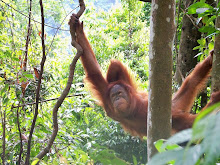
M.O.M (Missing Orangutan Mothers): Celebrate Mother’s Day at the Zoo with the Orangutans at Cheyenne Mountain Zoo


Photo by Tracey Gazibara

Orangutan mothers and babies have an incredibly close relationship. Baby orangutans don’t have a support network around to give them the many lessons of finding fruit, building nests and other survival techniques. Their mothers teach them everything about survival in the forest before they set out on their own.
Because of the growing demand for palm oil, and irresponsible forestry practices, more and more orangutan mothers are being killed every year in Indonesia. Their rain forest homes are literally being wiped out to make way for palm oil plantations… leaving hundreds of helpless orphans. Some of the lucky ones end up at Nyaru Menteng– which is operated by the Borneo Orangutan Survival Foundation. The Center is now home to nearly 650 orangutans– the vast majority of them young orphans in need of love and care.
Mother’s Day is the perfect day to bring awareness to the plight of these beautiful red apes and to encourage people to help protect them.

Mother’s Day is the perfect day to celebrate and pay tribute to M.O.M.– Missing Orangutan Mothers


Schedule of Events:
12 noon – Orangutan show
1:30pm – Orangutan painting demo
2:30pm – Orangutan enrichment


Orangutan Painting

10am-3pm:

• Coloring & word search for kids
• Help make orangutan enrichment
• Make an orangutan nest
• Learn about orangutan conservation

For more information about the M.O.M program please visit the Orangutan Outreach website.
Read more about the Palm Oil Crisis on our website.
For more information visit www.savetheorangutan.org online.

Other Mother’s Day events at Cheyenne Mountain Zoo:

• Join us for a Mother's Day weekend Mother and Daughter WildNight sleepover, Friday, May 7!
• Ignite your wild sides with "Mother, May I?" Family Program for the whole family, Saturday, May 8!
• Learn more about the delicious Mother's Day Brunch offered on May 9th, reservations are required.
• Need a special gift for Mom? Discover our Unique Gifts page filled with wild gifts that give twice!

Visit Redapes.org

April 27, 2010

Turkey Vulture Q4C Hike Re-cap

Eighteen people braved the chilly, foggy morning to hike Talon Trail in Cheyenne Mountain State Park (CMSP) on Sunday, April 18th to look for turkey vultures and other migratory and resident bird species. Despite the damp weather conditions, many birds were out and about– singing, defending territories, finding mates, building nests, foraging, just doing what birds do best! The group was made up of novice birdwatchers, expert raptor monitors from CMSP, and people who just love nature and getting outdoors. In all, the group saw nearly 30 species of birds, including 7 turkey vultures, which made their appearance at the end of the hike once the fog had finally burned off. Other highlights from the trip included viewing a golden eagle nest and seeing the park’s 1st ever recorded peregrine falcon!


A list of some of the bird species they saw on the hike:

Chipping sparrow
Coopers hawk
Golden eagle
Northern flicker
Peregrine falcon
Red-tailed hawk
Spotted towhee
Tree swallow
TURKEY VULTURES!
Western bluebird
Western scrub jay
White-breasted nuthatch

April 6, 2010

Why Would We Be Bowling For Rhinos?

Because we LOVE rhinos!

What is Bowling for Rhinos?
Each year the American Association of Zoo Keepers (AAZK) sponsors a fundraising bowl-a-thon called Bowling for Rhinos. Since its beginning in 1990, Bowling for Rhinos has raised $3.5 million for wild rhino conservation. 100% of the funds raised from the event go toward protecting the world’s remaining 24,500 rhinos.

In Kenya we support the Lewa Wildlife Conservancy where our donations help protect both black and white rhinos. In Indonesia we help protect the remaining Javan rhinos at Ujung Kulon National Park and the Sumatran rhinos in Bukit Barisan Selatan and Way Kambas National Parks.

Cheyenne Mountain Zoo’s chapter of AAZK has been an active participant in Bowling for Rhinos for several years, raising over $25,000 to date. With your help, we can continue to help protect these amazing animals! (Photo left: Mom and baby black rhino.)

Why Save the Rhinos?
Only 5 rhino species exist today when once there were over 100 distinct species. The 5 remaining species – White, Black, Indian, Sumatran and Javan – are all critically endangered and are being heavily poached for their horns, which are used as dagger handles and for Oriental medicines.

Rhinos are a keystone species:
•They are mainly browsers, keeping shrubs and bushes in check by pruning them.
•They dig up roots with their horns during feeding, exposing their tender shoots for smaller herbivores to feed on.
•They disrupt the soil, which allows for easier seed germination.
•They fertilize the land with their dung and help spread seeds.
•Their skin harbors parasites, which provide food for birds.

By protecting rhinos, we save large expanses of habitat. Saving these habitats protect many other endangered species as well as rhinos.

What is AAZK?
AAZK is a national professional association of zookeepers and other individuals interested in conservation locally and internationally. Cheyenne Mountain Zoo’s chapter raises money through fundraising events to buy enrichment for the Zoo’s animals, provide professional development opportunities for Animal Staff, and to support conservation organizations that protect animals and habitat.
(Photo right: Baby white rhino).

BOWLING DETAILS:
Come show off your awesome bowling skills, how great you look in those shoes, and HELP US SAVE RHINOS!

PRIZES, RAFFLES, ANIMALS FROM THE ZOO and MORE!

Saturday, May 8, 2010, 6-8 p.m.
Brunswick Zone, 999 N. Circle Drive
Cost: $10 per bowler + sponsor dollars

All are welcome but you must pre-register to bowl. Visit online (click Upcoming Events and Happenings) or call 719-633-9925 x133.

Visit our Facebook page for FUN rhino trivia every Wednesday and all throughout the week of May 3, 2010.


(Photo above:Indian rhinos.)

April 4, 2010

Bird-watching Hike on Sunday, April 18th


Welcome the annual return of Colorado’s Turkey Vulture and other migratory birds! Join Jenyva Turner, Cheyenne Mountain Zoo (CMZ) zookeeper and vulture enthusiast, on a bird-watching hike in Cheyenne Mountain State Park, Sunday, April 18, from 8-11am.This hike is FREE courtesy of Cheyenne Mountain Zoo's Quarters for Conservation program.

Hike Description: We will stroll along spring wildflowers, prairie dogs and bluebirds and gradually wind up to scrub oak where we may find towhees and jays. Our hike ends in the Douglas fir/Ponderosa pine habitat of tanagers, nuthatches, warblers and hummingbirds. Great views of the prairie below will provide excellent views of turkey vultures and other raptors. Meet at 8am in the trailhead parking lot (1st left turn after passing the Visitor Center). Total length: 3 miles. Elevation gain: About 600 feet. More details...

To sign-up for this hike please email Jenyva with your details at jturner@cmzoo.org.


Vulture Action Items:
• Get to know our local vultures! Buy some binoculars and become a bird watcher!
• Protect wildlife habitat by getting involved in your local parks, open spaces and sustainable conservation groups. Visit websites from the following groups:
Sierra Club
Trails and Open Space Coalition
Wild Connections
Wildlands Restoration Volunteers
Rocky Mountain Institute
Catamount Institute
•Keep garbage cleaned up to prevent vultures and other wildlife from eating non-food items.
•Report roadkill so authorities can safely remove it. This will protect scavengers, like vultures, from injury or death. Along roads in Colorado Springs call: 719-385-5934. On El Paso County roads call: 719-520-6460. On Colorado state roads call: 719-576-1868.
•Do not leave animal carcasses killed with lead shot lying around; use an alternative type of shot.
•Avoid the use of poisons to kill wildlife.
•Recycle paper and buy recycled products to reduce the need to cut down trees that vultures roost in.
•Vote with your tokens and donate your quarters to vulture conservation at Cheyenne Mountain Zoo’s Quarters for Conservation display.

March 26, 2010

Snow Leopard Update


On March 3, 2010 our own Megan Sanders received an update from the Snow Leopard Trust letting us know that they just collared a brand new male Snow Leopard near the research camp! They are hoping to collar a female this year but this male looks like he may be young and in great shape. This is VERY EXCITING!!! He is known as M7 on the GPS maps.


The latest update from Jennifer Snell Rullman, Conservation Program Director at the Snow Leopard Trust (SLT) is as follows:

Update for March 15–19, 2010:
After several weeks of only hearing from one or two cats, we have recent location uplinks from four of the five collared snow leopards. Perhaps one of the most remarkable journeys depicted by this data is that of our newest cat we call M7. He is a real mover! He was fitted with his collar on February 16th and almost immediately took off on a NE path covering over 30 km in less than a week across extremely rugged terrain (meaning he may have had to walk up to 60 km from point to point when considering the actual terrain). This week was no different. After apparently hunting on the April 7th he stayed there until the 10th before moving further north. Once he hit the edge of the mountain range he was faced with a vast expanse of steppe/desert in front of him. He opted to turn back to the SW, nearly following in his own footsteps, until he reached and area we call “the badlands.” At this point it is very possible that he skirted this area, as the badlands is an area of low-lying sandstone-like formations we consider to be unsuitable snow leopard habitat (both Itgel and Saikhan have come close to, but seemingly avoided, the badlands as well). He finally turned again, walking back to the SE, covering more than 30 km in just two days. This lengthy and rapid movement pattern is similar to what Aztai exhibited in his initial days after collaring.

Three locations were received from Shonkhor, who appears to have set off on yet another one of his trademark expeditions. He has crossed the wide valley separating Toson Bumba and Tost mountains, and based on the uplink from him on the 12th of March, was near the south-western edge of Aztai's home range.

In contrast to M7 and Shonkhor’s long treks, Aztai continued patrolling the core of his home range.

Orjan also managed to replace Tsagaan's collar, which was running low on batteries, on the 12th of March when he was caught less than 200 m from the camp. Tsagaan seems to have grown in size since he was last caught. He now weighs 44.5 kg and his body length has increased by 4 cm, making him 124 cm long. Unfortunately, since his successful release we have not heard from the collar and so we are waiting to see if there is a malfunction with the collar or if he is holed up in an area where the signal can not reach the satellite. But as each day goes by we are more concerned that the collar has failed to turn on. Hopefully we will hear from his collar soon and then Orjan will head towards the Toson Bumba range where he will focus on replacing Shonkhor's collar and hopefully catching a female leopard. Given our capture history (5 males have collars on today); it is no exaggeration to say that catching a female will be more than welcome!


Below is the latest GPS map uplink from SLT. “The new collared cat (in blue) is truckin!!” said Megan Sanders when she saw the map.


We are hoping to get updates from Jennifer bi-monthly after April and we will keep you updated as we hear news from SLT. Stay tuned!

March 25, 2010

Pawnee Montane Skipper Butterfly Conservation


What is a Pawnee Montane Skipper you ask?

This butterfly is native to only one area of the Colorado Front Range. Its habitat is southwest of Denver, where the South Platte River drainage meets up with its north fork. It tends to inhabit dry, open Ponderosa Pine woodland with sparse groundcover at 6,000-7,500 feet. As of right now, it only has 37.9 square miles to call its home as noted by the Denver Water Department. This species’ roaming area was bigger in the 60’s and 70’s, but with the advancement of housing developments and the expansion of Denver’s boundaries, the skipper has lost its range and some of its food sources.

In June of 2002, the Hayman Wildfires charred 138,000 acres of land. This resulted in a 40% decrease in the skipper’s habitat. Two previous fires in 1996 and 2000, Buffalo Creek and Hi Meadow, wiped out an additional 10% of skipper habitat.

The skipper is classified as a federally threatened species. The recovery plan for the Pawnee Montane Skipper was placed into effect on September 2, 1998. The recovery plan includes monitoring its habitat and removal of less than 5% loss of skipper’s habitat to developments such as roads, housing, or recreational and a heavy planting project of the Blue Grama Grass and Prairie Blazing Star. Along with the planting of feeding plants, the project is also aimed at eradicating noxious weeds like Mullen, Knapweed, Russian and Canadian Thistle, Hound’s tongue, or any other noxious plant that will compete with the skipper’s nutrient plants.

While the Pawnee Montane Skipper Conservation effort will continue to receive basic ongoing support from the CMZ Conservation Fund, we still need your volunteer support with “boots on the ground” habitat restoration. To register, go to http://www.rmfi.org/contact.

In addition, there is another way that you can help. Local artist Carol Overbeck is designing and making jewelry featuring our local butterflies. The profits will go directly toward research and habitat restoration for the Pawnee Montane Skipper. If you want to make a difference for local conservation, these opportunities are for you. Please check out the Cheyenne Mountain Zoo website for details and future updates.

March 23, 2010

Endangered Species Day Art Contest


The nationwide Endangered Species Day Art contest provides students with an opportunity to learn about endangered species and express their knowledge and support through artwork. The contest is organized by the U.S. Fish and Wildlife Service, the Endangered Species Coalition, the Association of Zoos and Aquariums and the Ogden Museum of Southern Art/ University of New Orleans.

Subject Matter
Artwork should highlight one or more land- and/or ocean-dwelling endangered species—mammal, reptile, amphibian, bird, fish, plant, and/or invertebrate (e.g., insect, spider, snail, coral, crustacean or clam)—found in the United States. Entrants are encouraged to depict species that are found in their region. Entrants may wish to choose from the U.S. Fish and Wildlife Service’s Spotlight Species.
(See a list of all endangered species here.)

Judging
Winners will be chosen in four categories: K-Grade 2, Grades 3-6, Grades 7-9, Grades 10-12. From these, one national winner will be selected in 2010. Contest entries will be evaluated by a prestigious panel of judges, including artists and conservationists. Initial judging will be conducted by the Ogden Museum of Southern Art, a Smithsonian Affiliate.

Prizes
The contest’s grand prize winner will be honored with a special trophy designed by a gifted young artist, Meredith Graf of New Orleans, LA. The winner’s name will be engraved on the trophy’s base, which will be displayed in Washington, DC. The national winner will receive a round-trip flight to Washington, D.C. for him/herself and one guardian to attend a reception. Accommodations will also be provided. Prize is not redeemable for cash. All other expenses are the responsibility of the winner. Winners must be available for travel sometime in May. In addition, an exhibition of the students’ artwork and other promotions are planned.

The deadline for submission is March 26, 2010. See all the entry requirements and get your entry form.

For more details on the contest and general Endangered Species Day information, log on to www.endangeredspeciesday.org

March 1, 2010

CHEYENNE MOUNTAIN ZOO WINS “BEST OF SHOW” AT 2010 ADDY AWARDS


Cheyenne Mountain Zoo took home a total of eight achievement awards on Saturday, February 27 at the annual Pikes Peak Advertising Federation ADDY Awards. Included in the covey of awards was the Federation’s “Best of Show” award and trophy for the Zoo’s Non-Traditional Campaign which was unveiled through the summer months of 2009. America’s mountain Zoo also collected four Gold Awards, two Silver Awards and a “Best of Show - Radio” award for their summer Zoo Campaign.


The Non-Traditional Campaign from the summer of 2009 is remembered by area residents for the giant animal appliqués that periodically appeared on downtown high-rise buildings, shopping centers and even a Metro bus. The inspiration behind the animal placements was a demonstration of Cheyenne Mountain Zoo “coming off the mountain” and into the lives and the aesthetic lifestyle of the community. The Zoo did this in a variety of ways, from symbolic giant animals on buildings, to the ZOOM program where the Zoo took animal ambassadors to schools, senior centers, parties and other human gatherings. This interaction of the Zoo with the community helped and continues to help to make the Zoo’s mission a reality…to make the connection between people and wildlife and wild places through experiences that inspire action.


Inspired by the appearance of a giant Panamanian Golden Frog on downtown’s Chase Bank Building, a neighboring retailer even decided to dedicate a special product to the campaign. Josh and John’s Naturally Homemade Ice Cream announced that they would add a new flavor to their rotating menu of ice creams, Panamanian Golden Fudge. The conservation and community- conscious ice cream company also donated 50% of the proceeds from the sales of their Panamanian Golden Fudge ice cream to Cheyenne Mountain Zoo’s Amphibian Rescue and Conservation Project.

February 11, 2010

Species of the Day

To coincide with the International Year of Biodiversity 2010, and increase awareness of the huge variety of life and raise the profile of threatened species, IUCN has launched The IUCN Red List of Threatened Species ™ “Species of the Day”.

Each day in 2010, a different species will be featured! Visit the site each day to learn more about these threatened species.

February 3, 2010

Scavenge for Vultures!


-Photo Credit: Tracey Gazibara
Post by Jenyva Turner


Our Zoo docents are holding a "Scavenge for Vultures" sale on Saturday, February 6th in the Lodge at Moose Lake beginning at 12:00 pm. Docents plan to bring a variety of animal-themed items to sell. The funds raised will go towards Cape Griffon vulture conservation in South Africa. Come scavenge around for something you'd like!

Why save vultures? As obligate scavengers, vultures play a vital role in the health of an ecosystem by cleaning up animal remains and helping prevent the spread of disease. Unlike other scavengers, vultures have powerful stomach acids that kill many diseases that affect humans and other animals.

In areas where vultures have disappeared, the ecological cycles cannot be completed successfully. The Vulture Programme in South Africa is working with local communities to ensure that existing vulture populations prosper so that they can repopulate areas where vultures no longer exist and once again restore ecological balance.

We welcome you in our efforts to help vultures!

January 28, 2010

Will You Hang Out with Me this Valentine's Day?

Looking for a creative gift for someone who has everything? Chances are they don't have a Bornean or Sumatran orangutan! The two species of orangutans are both endangered in the wild.

Share in the care of Cheyenne Mountain Zoo's animal residents and purchase a special Valentines Day adoption package in the name of your friend or loved one.

You gift includes:

Cuddly 12” plush orangutan
Personalized adoption certificate
Fact sheet about orangutans
Invitation to Parent Day in August 2010 for adopt parent and one guest
Full-color orangutan photo
Adopt parent recognition on website
Get Closer email blasts

Get yours now while supplies last!