Welcome to Cheyenne Mountain Zoo’s official blog! From amazing animal stories to a "behind the scenes" look at daily zoo life, this is the place to get to know
Cheyenne Mountain Zoo on a more personal level. Check back often to get In Between the Spots!
Favorite Zoo Animal: The giraffes are my favorite because their tongues are so long and they are very sweet and interesting animals.
How many years have you been on the Zoo Crew? This is my first year in the Zoo Crew.
What’s your favorite part of CheyenneMountain Zoo? My favorite part is learning about all the different animals.
Why did you become a member of the Zoo Crew? I wanted to learn about animals and see what a career with animals would be like.
What’s your favorite task? Working in the Loft because you get to be around animals and teach people about them.
Why should other kids your age become part of the Zoo Crew? You learn a lot of things that will be helpful later in life and customer service skills. It is also one of the most fun things I’ve ever done.
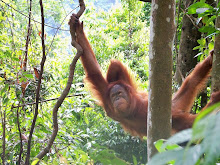
Do you have any Funny/Good Stories? I was in Primate World and the baby orangutan was swinging back and forth. All of a sudden he jumped down, ran over to the glass and smashed his face against it. It was the cutest picture ever!
Career Aspirations: I would like to be involved with conservation education, especially teaching children about wildlife and how they preserve it.
What’s your favorite part of Cheyenne
Mountain Zoo (CMZ)? The beautiful scenery and natural exhibits.
What inspired you to become a camp
counselor here at CMZ? I love animals and enjoy teaching others about them, so this is a dream job.
What age kids are you working with? This summer, I have worked with kids from four to 15 years old.
What activities do you have planned for them throughout camp? The campers will be meeting animals up close, going on behind the scenes tours and hearing personalized keeper talks.
What has been your biggest obstacle to overcome being a camp counselor? The biggest obstacle has been trying to explain information in a way that young kids understand and the older kids are still entertained.
What is the benefit of being a camp counselor at CMZ? I get to see new things every day and I learn so much from the kids and my fellow counselors.
Do you have any Funny stories? I asked a group of four-and five-year-olds “What animals have scales?” They all immediately responded that giraffes have scales.
Today we bid adieu to Amiga, one of the best ponies we have know at Cheyenne Mountain Zoo. She is retiring to join one of our own Zookeepers at her home.
Amiga, who is 15 years old, came to Cheyenne Mountain Zoo 6 years ago, and has been a guest favorite since the moment she arrived. She is kind and caring and has helped teach many kids over the years in our Pony Camps and Programs.
The other ponies gave Amiga some special treats to wish her well!
Lots of visitors came to see Amiga off.
Watch some video clips from Amiga's Farewell party! Amiga was excited to paint a picture for the party-goers! Zookeeper, Beth, helped get everything ready to Amiga to start painting.
Here is the finished product:
Check out some of our other animal's paintings HERE.
Since our Indian start tortoise, Butti, went missing yesterday we have received a lot of questions about the difference between a tortoise and a turtle. Here are the facts!
Butti, who lives in The Loft at Cheyenne Mountain Zoo, went missing on Sunday, March 27, 2011.
--Turtles primarily live in water (fresh water and oceans) and so have webbed front feet or flipper-like fins to make swimming easier.
--Tortoises live almost exclusively on land, so do not have flippers, but normal feet without webbing, often with sharp claws for digging. They only enter water to drink or wash themselves off, and can in fact drown in strong currents. They may be found in arid areas.
--Turtles tend to have flatter shells than tortoises, while tortoises have a more domed shell.
--Turtles can be omnivorous, eating both plants and insects, while tortoises are herbivores, eating only plants and leaves and other vegetation, so they are herbivorous, especially preferring moisture-bearing vegetation.
Butti and brother, Tutti, in their exhibit in the Loft, prior to Butti's disappearance. They are Indian star tortoises.
Cheyenne Mountain Zoo appeals for return of tortoise, which requires special care.
March 28, 2011, Colorado Springs, CO – Cheyenne Mountain Zoo is appealing to the public for the safe return of Butti, a 13-year-old Indian star tortoise, zoo officials believe was stolen Sunday, March 27. Staff last saw Butti in his exhibit in The Loft around 4:30 p.m. When Butti’s keeper went back to check on him at 4:45 p.m., he was missing. Staff frantically scoured The Loft and swept the zoo, but the search turned up nothing. Staff reported there were several guests in The Loft shortly before Butti disappeared.
Cheyenne Mountain Zoo is concerned for Butti’s welfare, as he has special care and dietary needs. If he isn’t kept at the proper temperature and doesn’t receive the right type of food, he could suffer from significant health problems.
“This type of tortoise is not uncommon in the pet trade. We think someone probably thought the tortoise looked interesting and is planning to keep him as a pet, but we’re worried Butti won’t receive proper care,” said Katie Borremans, Public Relations Manager.
Butti and his brother, Tutti, are guest favorites at Cheyenne Mountain Zoo. They have been together their whole lives and are frequently seen following each other around their exhibit. The zoo did file a police report, but is most concerned about Butti’s return. Charges will not be filed if he is returned safely. Please call 719.633.9925 x140 with any information on this incident.
The Loft has seen more than one million visitors since it opened in 2008, and has never had an animal stolen. The Loft is a place where guests can interact and connect with animals in a more open environment. Guests are able to see animals like Butti up close and even touch them under staff supervision.
“Cheyenne Mountain Zoo’s mission is to provide up close experiences and make animals accessible to the public. It’s a shame someone took advantage of that. We’ve never had something like this happen before, and we certainly don’t want to penalize guests who respect the boundaries because of one bad seed,” said Borremans.
Butti is around the size of a grapefruit. He’s about six inches long and weighs a little over a pound. He has a unique shell with a bumpy star pattern.
Wild and Weird: Naked Mole Rats Handsome? No. Cancer-free? Yes.
Naked mole rats win no beauty contests. With their pale, pruny pelts, buckteeth and tiny, beady eyes, they’re cute to few and cuddly to none but each other. They have strange biology, too -- feeling little pain in their skin and dwelling in smelly, underground colonies like insects. Plus, young naked mole rats eat nothing but the feces of adults. The most intriguing thing about the mole rats, though, may be longevity: “Old Man,” the most ancient naked mole rat known to humankind, died last November at the ripe old age of 32. Naked mole rats routinely live almost 10 times longer than their above-ground cousins.
One reason naked mole rats enjoy such long lives? They've never been known to get cancer -- in contrast with mice, 70 percent of whom perish from the disease at just a few years of age. In fact, naked mole rats may prove as valuable as mice in finding a cure for cancer. That beats winning a beauty contest any day.
We found this video online of a study about elephants, and had to share it.
Footage of an oversized experiment has revealed that elephants understand when they need help from a partner. In the test, two animals had to work together - each pulling on a rope in order to tug a platform towards them.
Elephants' apparent grasp of the need to co-operate shows, scientists say, that they belong in an "elite group" of intelligent, socially complex animals. Researchers from the University of Cambridge built the apparatus, which was originally designed for chimps.
Study leader Dr. Joshua Plotnik from the University of Cambridge told the BBC it was exciting to find a way to study elephant behaviour in such detail.
"It's so hard to work with elephants because of their size," he said. "We see them doing amazing things in the wild, but we can see from this that they're definitely co-operating."
Federal biologists count 50 Mexican wolves in wild
Feb. 1, 2011 07:41 PM Associated Press
ALBUQUERQUE, N.M. - Federal wildlife officials said Tuesday they have counted 50 endangered Mexican wolves on the Arizona-New Mexico border, up from 42 wolves a year earlier.
The Fish and Wildlife Service's southwest regional director, Benjamin Tuggle, said the figure from last month's annual survey includes 29 wolves in Arizona and 21 in New Mexico. Researchers determined there are two pairs of breeding wolves.
"We're pretty confident with this number and we're happy it's significantly better than last year's," Tuggle said.
Of the 50 wolves, federal biologists said 14 were wild-born pups that survived through the end of 2010 - double the number of pups from the 2009 count.
Environmental groups rarely agree so enthusiastically with federal wildlife managers, but both sides were pleased by the figures.
"It's obviously good news that the numbers have gone up," said Michael Robinson of the Southwest Center for Biological Diversity. "It reverses a very troubling trend over the previous four years, where the numbers either went down or were static. We remain concerned that the Mexican wolf is perilously in trouble, but it's much better to see these numbers."
In another development, federal biologists also announced that two adult wolves - a male and a female - were released last week into the Blue Range recovery area, which straddles the Arizona-New Mexico border. The female had been born in the wild but was brought to a captive breeding program.
Tuggle said it was the first release this year - "just one of the actions we are undertaking to increase the number of Mexican wolves on the ground."
Musicians Sarah McLachlan and David Archuleta (as well as Bones actors Tamara Taylor and John Francis Daley, and The Simpsons' Yeardley Smith) are ferocious for felines.
The celebs are teaming up with National Geographic's "Cause an Uproar" campaign to raise awareness about the disappearing populations of lions, tigers, and other big cats.
Just in case you doubt that the king of the jungle needs help: Lions numbered about 450,000 in the 1940s, but now only 20,000 are left. The three main issues facing big cats are habitat loss, illegal hunting and retaliatory killings.
Watch Sarah and David cause an uproar for big cats around the world:
Check out the BIG CATS at Cheyenne Mountain Zoo. Below are feeding, demo, and enrichment times for some of our big cats. Click here for the most up-to-date show schedules.
Mountain Lion Enrichment Feeding and Talk
When: Daily, 3:15 p.m.
Where: Rocky Mountain Wild, at mountain lions
What: Let our Animal Care Staff introduce you to Colorado’s big cat. Through interacting with enrichment, from bones to papier-mâché, we hope you will gain an appreciation for how well mountain lions are adapted to their mountain home.
Tiger Show
When: Saturdays & Sundays through September, 2:00 p.m.
Where: Asian Highlands, at tigers
Message: Amur Tigers are the world’s largest cat and have the abilities to match. Catch a glimpse of how fast they can run, how they use their claws and even how well they can swim.
Related Web Sites: http://www.amur-leopard.org/
Amur Leopard Enrichment Demonstration
When: Saturdays & Sundays through September, 11:00 a.m.
Where: Amur Leopard Exhibit
What: Our Animal Care Staff works hard to keep our cats active and thinking. Come watch the leopards interact with some fun enrichment items.
Happy birthday to you...happy birthday to you...happy birthday dear Becky...happy birthday to you!!
On January 9 we celebrated Becky the giraffe's 30th birthday! Becky is the oldest member of our herd and was born here at Cheyenne Mountain Zoo January 9, 1981!
Researchers maintain that giraffes typically live to about 25 years old in the wild, but can live to over 30 years old in captivity (see more giraffe facts online).
Here are some photos of the special "cake" she received on this very special birthday. Making the cake...
Cheyenne Mountain Zoo’s animal family recently grew by two, with the addition of male ring-tailed lemurs Hank and Stewart in Monkey Pavilion. The pair moved here from Pueblo Zoo to join fellow ring-tailed lemurs Jimmy and Jabari, and black and white ruffed lemur Ozzy. Hank, age 5, and Stewart, age 4, both have the signature ring-tailed lemur tail – very long with vivid black and white stripes. The easiest way to tell them apart is by looking at their size. Hank is smaller, weighing in at about five pounds.
You can see Hank and Stewart on exhibit, but they haven’t moved in with the rest of the lemurs yet. They are currently going through what we call the “howdy” process, getting to know their new roommates a bit better before they share the same exhibit space. A mesh door called a “howdy” separates Hank and Stewart from the others so they can see and get used to each other. It takes time, though, and you might see them “stink fighting” as a way to establish territory. They have potent scent glands on their wrists, which they rub on their tails and wave in the air in an attempt to outstink the others.
Lemurs are primates, and are related to monkeys and apes. In the wild, they only live on the African island of Madagascar. Black and white ruffed lemurs are critically endangered and ring-tailed lemur populations are decreasing, mainly because of habitat destruction due to farming and logging.
The two Mexican gray wolves were introduced for the first time earlier this month and it went GREAT! They follow each other around, lots of prancing and play-bowing. Also calmly standing together looking in the same direction "on alert." The new female "Weeko" is from California, she first started to explore the exhibit by herself a few days before the introduction. She was staying towards the top of the exhibit when by herself. As soon as they were together she seemed comfortable going where ever Masadi would go.
Most of you know Skipper, Kowalski, Rico and Private, four cute penguins living in the Central Park Zoo, who were made famous by Dreamwork’s Madagascar movie in 2008. These penguins have created quite a name for themselves and they even have their own show on Nick.
Cute and cuddly…that's exactly what they want people to think. Why? Because this 4-some of placid-looking penguins are actually an elite strike force with unmatched commando skills and a secret headquarters. Their mission? To maintain order in the zoo!
We have our own elite force at the Cheyenne Mountain Zoo! Instead of just 4, we have 11 “cute and cuddly” African penguins that can be seen daily in the Aquatics building.
Roxanna Breitigan, Animal Care Manager and our own African Penguin Quarters for Conservation champion, called these little guys “the ultimate hoarders” at the Zoo.
Sobe, male, 12 years old Sprocket, male, 12 years old Murphy, female, 16 years old Jess, female, 30 years old Mogley, female, 10 years old Fudge, female, 24 years old Colorado, male, 17 years old Sally, female, 10 years old Decker, female, 12 years old Tasselhoff, male, 10 years old Joe, male, 12 years old
They all have different personalities and behaviors, but the keepers and staff tell them apart by the colored bands that are on each penguin’s leg.
Size: 23-25 inches tall; 5-9 pounds Diet: Small fishes, such as pilchard, anchovies, horse mackerel and sardines Range: Africa’s coastal waters and islands, from Namibia through South Africa
Habitat The Southern coast of Africa is where you will find the majority of the African Penguins. There are 24 known colonies of them around this continent. There is no place else on Earth where this species of penguin is found in the wild.
Predators Sharks and fur seals hunt penguins in the water. Seagulls, mongoose and cats prey on nesting penguins and their offspring. Due to the unique patterns of black and white, the African Penguin is less likely to be found by predators in the water during their own hunting efforts. The dark back makes it difficult for birds of prey to see them from above while they are swimming, and the white underbelly prevents water predators from easily seeing them from below. Relatives There are 18 penguin species. African penguins are closely related to the Humboldt, Galapagos and Magellanic penguins.
Reproduction The African Penguin do not have a set breeding season, however, the majority of their breeding takes place in early February.
Family Life African penguins breed in huge, noisy colonies. They lay two eggs in burrows, bowl-shaped depressions dug in the sand, which protect the eggs from the sun. Like all penguins, they form tight pair bonds, and both parents incubate the eggs and feed the chicks for 2-4 months.
Vocalization African penguins are also known as jackass penguins, because they make a sound that is very similar to a donkey's bray. They make this sound in order to interact and communicate with other members of their colony. Watch a video below of our penguins vocalizing.
African Penguin Conservation African penguins are in danger of extinction. Major reasons include depletion of their food from overfishing, climate change and pollution from incidences such as oil spills.
The South African Foundation for the Conservation of Coastal Birds (SANCCOB) works to protect and rehabilitate South Africa’s seabird populations. Quarters for Conservation funds support their efforts to rescue, hand raise and release orphaned and abandoned chicks back into the wild. Learn more at www.Sanccob.co.za.
It is estimated that the African Penguin can live 10-15 years in the wild (they can live up to 30 years old in captivity). This isn’t very long given that they don’t mature sexually until they are from 2-4 years of age. In the past 35 years the number of them has dropped from 1.5 million to less than 150,000.
In Africa, the eggs from these penguins are a very common source of food. Due to many people living in poverty in this area there aren’t any controlled efforts or laws prohibiting it. As a result many of the eggs are removed before they have the chance for the young to develop.
Another problem is that their natural habitat continues to be destroyed. More than 19,000 of these penguins were killed due to an oil spill in 2000. Do You Love Our Penguins? Get involved by voting for Penguins in our Quarters for Conservation every time you come to the Zoo. You can also adopt a penguin at the Zoo!
You and your family can also do an animal encounter with the penguins and meet them one-on-one, up-close and personal!
Many Zoo members and guests have asked, “How did the goat kids get their names?” Roxanna Breitigan, Animal Care Manger, has the answer:
The female’s name, Yazhi, means “little one” in Navaho. Because she was always small and petite, the name seemed to fit. The male’s name is Honovi, which means “strong” in Hopi. His keepers noticed he was a fighter during the first months of his life when he was a bit ill and injured. Both names come from Native American languages and fit the goat kid’s personalities.
Previously, guests could view the two kids in the “middle” tapir yard. Since then they have moved to the Rocky Mountain goat exhibit to live with the rest of the herd. Yazhi and Honovi have also been weaned off of bottles of milk and now eat grains and alfalfa. You can see the entire herd of Rocky Mountain goats during regular Zoo hours.
November 18, 2010 was a sad day at Cheyenne Mountain Zoo. Uhura, a twenty year-old female in the Zoo’s famous reticulated giraffe herd, was euthanized.
Uhura was accidentally bumped by a herd member. This caused her to lose footing and fall down a slope that acts as a natural barrier between the giraffes and guests.
Emmett and Digger, Cheyenne Mountain Zoo’s Rocky Mountain Wild grizzly bear pair, are happily swimming in their exhibit again. You’d never know they underwent surgery just a few short weeks ago, taking turns on Zoo veterinarian Dr. Liza Dadone’s makeshift operating table for a neutering procedure.
You have probably met Emmett and Digger before, but as a reminder, they both came from a Montana Fish and Wildlife facility in 2007. The boys were about 2 years old and were considered nuisance bears in the wild.
Emmett and Digger, both around 5 years old now, recently started exhibiting natural behaviors that were more aggressive with each other than their normal play routine. This behavior is consistent with their age, but the boys still ended up with a few bites and scratches.
“Time will tell, but we hope the procedure will help cut down on some of that aggressive behavior,” said Dr. Dadone.
At over 800 pounds each, Emmett and Digger are too big to transport to the Zoo’s vet hospital. Instead, the bears were willingly injected using positive reinforcement, and Zoo staff positioned each bear in their own “bedroom” den for surgery.
The procedure took about 1 hour and the stitches were all internal, so no head cone was necessary! Dr. Dadone used this opportunity to give the bears a thorough examination. She took blood samples, checked their teeth, ears and skin. Both have a clean bill of health and were reunited without hours of their respective surgeries. They were disgruntled by the ban on swimming for several days (they LOVE to swim). They had to make due by splashing around in their water bowls.
Have you noticed strange creatures climbing around the bottom of the Colobus monkey exhibit in African Rift Valley? If so, you have spotted our three new rock hyraxes! Hyraxes are small, rodent-like animals with long bodies and short legs. Native to Africa, the rock hyrax lives in rocky, shrub-covered areas and feeds on plants. The hyrax's wide mouth and sharp teeth enable it to take large bites of grass and quickly fill its stomach, ensuring they spend less time on land exposed to predators. Hyraxes also wedge themselves between rocks to avoid predators. So if it looks like they are stuck, not to worry, they are just exhibiting their natural protective behaviors.
Considered the closest living relative to elephants, rock hyraxes have a prominent pair of long, pointed tusk-like upper incisors. They also have a rubbery texture on the bottom of their feet to help them climb on rocks.
You can visit our rock hyraxes on your next visit to African Rift Valley during regular Zoo hours.
We were finally able to weigh Tahoma and he is now......drum roll please..........1,110 lbs!!!!! He is doing well and has managed to get a lot of the velvet off his antlers by rubbing them on logs, tree trucks and his barn. He will even let his keepers assist in some of the velvet removal. We have also noticed that his dewlap, the flap of skin under his jaw, is beginning to swell. When he goes into full rut, about a month from now, he will dig a urine wallow and dip his dewlap in it. Bull moose do that to advertise that they are looking for a mate and also to let other bull moose know they are around.
Tahoma earlier this summer, before the velvet began to shed.
Tahoma’s antlers now, shedding the velvet in Fall 2010.
Watch this short video of Tahoma rubbing his antlers on a log.
Please join us in welcoming Khalid, a two-year-old male giraffe who came to us from Oakland Zoo. Khalid has big shoes to fill with plans to eventually take over Mawimbi’s role as the Zoo’s top breeding male. Cheyenne Mountain Zoo has the most prolific giraffe breeding program in the world (192 births at Cheyenne Mountain Zoo since 1954!).
Khalid’s keepers train him on a daily basis helping him acclimate to the various indoor and outdoor exhibits within African Rift Valley. His favorite treats include bananas, carrots and apples. Khalid spends much of his time in the north giraffe yard (near the meerkat exhibit) socializing in a small group with one or two females. Within a couple of weeks he will be introduced to the main giraffe yard. If you are looking for him, he is a lanky giraffe with smaller ossicones (the horns on the head) and a lighter face.
Be sure to visit Khalid and the rest of the giraffe herd in African Rift Valley during regular Zoo hours.
Tembeling and Schanee: What happened to their Hands?
On your visits to Monkey Pavilion you may have noticed that we have a very special pair of Lar gibbons who call Cheyenne Mountain Zoo home. Our male, Tembeling, was born here at Cheyenne Mountain Zoo in 1996. His companion, Schanee, came to us from Omaha’s Henry Doorly Zoo and was born in 1980.
Tembeling has always been a guest favorite. He has a very sweet face and a fiery personality, but guests are probably most drawn to him because he is not just an ordinary gibbon. Tembeling is an amputee and is missing his left hand. In 1996, when Tembeling was still a baby he received an accidental bite wound to his left wrist. The zoo’s veterinary team tried very hard to repair the damage, but was unable even after several surgeries. At that point they felt that it would be in his best interest to amputate the hand. Tembeling has adapted amazingly well to this injury and sometimes people do not even realize that his hand is missing. During Monkey Pavilion’s Rainforest Review show he is always a crowd favorite as he shows how he has adapted to do all things gibbon in his own special way.
Tembeling
Schanee came to Cheyenne Mountain Zoo about 2 years ago to be a companion to Tembeling. She is more shy than Tembeling but will vocalize often, especially when excited about something. Schanee is also an amputee who is missing her left hand. Her injury happened later in life and was also due to an accidental bite wound. She suffered a broken arm and nerve damage to her hand and after many attempts to save her hand it was decided that it was beyond repair. Even though her injury happened when she was older, she has shown amazing resilience and adaptability in re-learning how to climb, swing and play. Who knows, she may have even picked up some pointers from her talented companion, Tembeling.
Schanee
Anyone who visits Schanee and Tembeling know that they are inseparable and love to be together. They are both an amazing example of how adaptable gibbons are through their ability to figure out ways to move around their environment using what they have. It is fascinating to watch them and see just how well these two very special primates have adapted to life with one hand.
Our Head Giraffe Keeper, Allison Kao, introduces you to the members of our giraffe herd and teaches you how to distinguish them based on their markings.
Indonesia Travel Journal
Visit our PALM OIL and ORANGUTAN BLOG
Panama Travel Journal
Visit our FROG BLOG
Words from Travelers
Have a favorite Zoo photo or a story to share from your Zoo Journey? Select stories and photos will appear on our blog and chosen photos will be shared in the Photo Journal above.
Submit your pictures and stories to: blogkeeper@cmzoo.org. (posting subject to approval and all photos become property of Cheyenne Mountain Zoo.)
Like us on...
Follow us on...
Subscribe to us on...
Explore Membership
Enjoy the Zoo 365 days a year with a one-year membership for you and your family. It's a great value! Start your journey HERE.


 Posts
Posts