Welcome to Cheyenne Mountain Zoo’s official blog! From amazing animal stories to a "behind the scenes" look at daily zoo life, this is the place to get to know
Cheyenne Mountain Zoo on a more personal level.
Check back often to get In Between the Spots!

September 26, 2012

Teens Making a Difference

Our teen volunteers went the extra mile this past weekend to help out Cheyenne Mountain Zoo's local conservation partner, Pinello Ranch. Pinello Ranch, located just north of Venetucci Farm, "serves as an oasis for wildlife along Fountain Creek." The property is surrounded by an urban landscape but is made up of pristine wetland environment making it a valuable habitat for birds, deer, and aquatic life.

Our teen volunteers signed up to spend their Saturday helping install trail markers for future birding tours and clean up over 150 gallons of trash along the Fountain Creek Watershed. In return they were able to explore the wonders of this magical environment.

Interested in helping this local champion? Look for the little yellow bird and vote for Pinello Ranch at the Quarters for Conservation Booth at Cheyenne Mountain Zoo.

September 18, 2012

What's New with Sustainable Palm Oil?


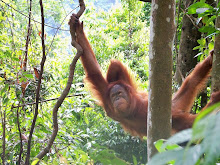
Do you have the newest version of the Orangutan Friendly Shopping Guide?  One of the most recent changes is that General Mills has joined the RSPO (Round Table on Sustainable Palm Oil), which means brands like General Mills, Cascadian Farm, Progresso, Pillsbury, Betty Crocker, Green Giant, Hamburger Helper, and Nature Valley are orangutan friendly choices!  The most up to date version of the shopping guide can be found at http://www.cmzoo.org/conservation/palmOilCrisis/

You can make orangutan friendly choices every time you shop at the grocery store by buying only products listed on the shopping guide.  The list of RSPO-member companies continues to grow, which is great news for orangutans and other animals that live in the rainforests of Borneo and Sumatra.  The RSPO is a multi-stakeholder group that is moving the palm oil industry toward sustainability.  To learn more about the RSPO, visit their website: www.rspo.org  

Around the country, Cheyenne Mountain Zoo’s Palm Oil Awareness Team continues to spread the message about how to make a difference for wild orangutans.  In the past, the Team has focused primarily on speaking at orangutan-related conferences.  This year, our Team has also been invited to speak at professional conferences for other species affected by the palm oil crisis.  In June, Mandy, one of our orangutan keepers, traveled to North Carolina to speak at the first Gibbon Husbandry conference.  Gibbons inhabit some of the same rainforests in which orangutans live, so the deforestation caused by unsustainable production of palm oil affects gibbons as well.  Coming up this month, our Animal Care Manager, Dina, will be traveling to Oregon to speak for the third year in a row at the annual Orangutan Husbandry Conference.  In September Dina and Tracey, our Vice President, will be hosting a booth at the American Zoological Association (AZA) National Conference in Arizona, where they will be sharing with zoo professionals from all over the United States ways to help guests at their zoos make informed shopping choices and make a difference for wild orangutans and other wildlife. Lastly for this year, in November, Dina will be traveling to California, where she has been invited to speak at the annual Elephant Managers Association conference.  Elephants are another of the many species affected by unsustainable palm oil. 

The Team will continue to work hard to make a difference for wild orangutans by raising awareness about the palm oil crisis and encouraging people to take action by providing tools and information that will allow them to make globally responsible consumer choices.  Join us in making a difference!

September 17, 2012

September 13, 2012

Antler Velvet + Stomachs = A Rocky Mtn. Wild Update

Tahoma has officially finished growing his 5th set of antlers and is now shedding the velvet off of them! Moose bulls grow new antlers every year and the velvet helps them grow. Once they are done moose will rub their antlers on branches to help shed the velvet and reveal their new antlers underneath. Keepers will use Tahoma's velvet for enrichment. Especially for carnivores like, wolves, bears and cats!


Our two grizzly bear boys Emmett and Digger are feeling the season change! Especially their stomachs! Both bears are super hungry and have been observed squabbling over even the smallest morsel like a raspberry or peanut. Bears start to bulk-up this time of year in preperation for denning up over the winter. Keepers have increased E & D's diets and they are eating it all, even their veggies!

September 11, 2012

Meet Betty!

September 4, 2012

Kenyan Sand Boa


We are continuing our blog series “The Hidden World of African Rift Valley,” where we introduce you to special animals who take the “hidden world” part quite literally.

This time, we’ll focus on Kenyan sand boas.  These beautiful snakes live in east Africa and are fossorial, which means they like to burrow underground. They do this to hide from predators (large birds, monitor lizards and jackals), to thermoregulate (cool off or stay warm), and to ambush their rodent prey.

Kenyan sand boas are a small boa species.  In this species, females are larger than their male counterparts, generally reaching about two feet long.  As is true with all boa species, Kenyan sand boas are not venomous. Instead, they are constrictors and kill their prey by suffocating it.

Guests can see our Kenyan sand boas bury themselves into the sand during our keeper talks held daily at 11:30 & 2:30 throughout the summer months in African Rift Valley.

Next time, we will meet another reptile from east Africa that is especially good at hiding.