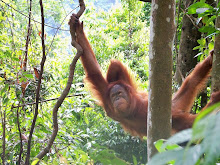
Congratulations to two blog readers and winners of the “My Favorite Zoo Memory” contest!
If you posted one of the comments below, please email blogkeeper@cmzoo.org to claim your prize!
Favorite Zoo Memory, Winner #1
This is really hard since I have some many great memories to pick from. I think my favorite zoo memory was adopting Zuri, a Western Lowland Gorilla in 1997. After attending a parent’s day event I realized Zuri was sick. I went home that day and wrote the zoo a letter inquiring about the health and status of Zuri, who I dearly adored. A few days later I received a handwritten letter from the zoo keeper explaining Zuri’s condition and process. I found it very special that someone took the time to personally respond to my letter. Thanks you CMZ for all the great memories!
Favorite Zoo Memory, Winner #2
My favorite zoo memory was several months ago at the Cheyenne Mountain giraffe exhibit. It was the very first trip to the zoo for our 1 year old daughter Adelaide. We bought a couple crackers and showed her how to feed the giraffes. All she could say was "oooooooo" and point. When we gave her a cracker she held it out and when the giraffe got close with her long tongue Adelaide decided to try and give her kisses. It was the cutest and funniest thing I have ever seen! After laughing I thought I'd cry we showed her how to blow kisses to the giraffe instead of trying to french kiss it. Our most memorable trip to the zoo by far.
November 30, 2009
November 29, 2009
Panama Travel Journal - Day 10
Day 10 – November 22, 2009
-By Bob Chastain
As we fly into Colorado Springs the earth looks positively brown and barren compared to the tropics. A place where last night was so warm I slept with not a single cover. Just laying on the sheets with a pillow. I love Colorado though. A place that is still as wild as the jungles of Panama. I also love our Zoo. A place where passion and imagination run wild. A place you helped to build. Built without government dollars; built on hard work and generosity of people like you. With your help we will fight this war and win some battles. The finish to the war is too far in the future, to vague to put a finger on…making the world a better place. Living thoughtfully with the work around us is something we never get to stop. Best of luck on your journey. I will miss the time we spent together through this blog and the memories you helped me keep alive.
Buenos Dias,
Bob
-By Bob Chastain
As we fly into Colorado Springs the earth looks positively brown and barren compared to the tropics. A place where last night was so warm I slept with not a single cover. Just laying on the sheets with a pillow. I love Colorado though. A place that is still as wild as the jungles of Panama. I also love our Zoo. A place where passion and imagination run wild. A place you helped to build. Built without government dollars; built on hard work and generosity of people like you. With your help we will fight this war and win some battles. The finish to the war is too far in the future, to vague to put a finger on…making the world a better place. Living thoughtfully with the work around us is something we never get to stop. Best of luck on your journey. I will miss the time we spent together through this blog and the memories you helped me keep alive.
Buenos Dias,
Bob
November 28, 2009
Panama Travel Journal - Day 9
Day 9 – November 21, 2009
-By Bob Chastain
I start writing again shortly after 7:00 a.m. I am anxious to get you this information and a way to inspire you to make your part of the world a better place. I will move to a new hotel this afternoon that is closer to the airport. A little bed and breakfast called La Estancia.
At 10:00 a.m., a quick visit to the pod to watch activity and video the frog bath I told you about. The frogs get bathed in a solution that is $100 a bottle, but it has to be done to ensure the frogs do not have chytrid. You will see this procedure as we post the videos of Dr.s Della and Eric starting the daily medical care each frog will receive for about two weeks.
La Estancia is interesting after my stay at a very nature-based hotel. I was nervous as we pulled up to an orange apartment building with a big iron gate and a push button to talk into, which lets them speak to the guest. My alert went up as I did not know what to expect. I was led into a hot and humid series of rooms by a man with broken English. As he showed me around the feeling of “Is this going to be OK?” came back over me. But it actually turned out to be a wonderful place. As evening came and the cool air came through the common rooms where people from around the world gather to read, talk, and work on their computer, I fell a little in love with the place.
Kevin and Jamie arrived an hour later with the same hot sweat and humid shine that I had earlier. Within the hour we were watching tamring and blue gray tanagers at the bird feeder. A sloth came down and I was able to share my find with Kevin and Jamie; and enjoy their excitement as I showed them the sloth through my binoculars. A funny squirrel came in with a broad brown strip on his back. Some scarlet tanagers species came in and the night was topped off with a possum. All this from the common area inside this apartment-type bed and breakfast. The night ended with a late dinner after a very scary cab ride where we were prepared to get, as they say, “rolled.” But that is a human interest story that you can ask Kevin and Jamie to relay, if you ever get to meet them in person. All ended well though with a perfect dinner in a local restaurant that would mark the end of our Panama trip.
Everything from here on out would be motion toward home and the hustle of an international airport with Spanish speaking customs agents.
-By Bob Chastain
I start writing again shortly after 7:00 a.m. I am anxious to get you this information and a way to inspire you to make your part of the world a better place. I will move to a new hotel this afternoon that is closer to the airport. A little bed and breakfast called La Estancia.
At 10:00 a.m., a quick visit to the pod to watch activity and video the frog bath I told you about. The frogs get bathed in a solution that is $100 a bottle, but it has to be done to ensure the frogs do not have chytrid. You will see this procedure as we post the videos of Dr.s Della and Eric starting the daily medical care each frog will receive for about two weeks.
La Estancia is interesting after my stay at a very nature-based hotel. I was nervous as we pulled up to an orange apartment building with a big iron gate and a push button to talk into, which lets them speak to the guest. My alert went up as I did not know what to expect. I was led into a hot and humid series of rooms by a man with broken English. As he showed me around the feeling of “Is this going to be OK?” came back over me. But it actually turned out to be a wonderful place. As evening came and the cool air came through the common rooms where people from around the world gather to read, talk, and work on their computer, I fell a little in love with the place.
Kevin and Jamie arrived an hour later with the same hot sweat and humid shine that I had earlier. Within the hour we were watching tamring and blue gray tanagers at the bird feeder. A sloth came down and I was able to share my find with Kevin and Jamie; and enjoy their excitement as I showed them the sloth through my binoculars. A funny squirrel came in with a broad brown strip on his back. Some scarlet tanagers species came in and the night was topped off with a possum. All this from the common area inside this apartment-type bed and breakfast. The night ended with a late dinner after a very scary cab ride where we were prepared to get, as they say, “rolled.” But that is a human interest story that you can ask Kevin and Jamie to relay, if you ever get to meet them in person. All ended well though with a perfect dinner in a local restaurant that would mark the end of our Panama trip.
Everything from here on out would be motion toward home and the hustle of an international airport with Spanish speaking customs agents.
November 27, 2009
Do Emmet & Digger Hibernate?
Many of our guests have asked us if our Grizzlies or other zoo animals will hibernate this winter. Hibernation is an instinct that many animals will continue to practice even in captivity if they live in cold enough climates.
Something that many people may not know about bears is that they are not a “true hibernator”. Instead they enter a state that is called "torpor", which means decreased physical and physiological activity.
Unlike a “true hibernator”, during those winter months bears do still wake up to drink and forage. In captivity this just looks like a significant decrease in activity and food motivation. We have already started to notice our boys slowing down.
Enjoy this slideshow of our famous grizzly residents:
Something that many people may not know about bears is that they are not a “true hibernator”. Instead they enter a state that is called "torpor", which means decreased physical and physiological activity.
Unlike a “true hibernator”, during those winter months bears do still wake up to drink and forage. In captivity this just looks like a significant decrease in activity and food motivation. We have already started to notice our boys slowing down.
Enjoy this slideshow of our famous grizzly residents:
November 26, 2009
Panama Travel Journal - Day 8
Day 8 – November 20, 2009
-By Bob Chastain
Today started slowly. I was having difficulty assimilating to any new “home” because I missed my last one. My feet also hurt this morning. The foot funk that started yesterday is now so bad that I can hardly walk. My toes and nail beds are red and swollen and in between my toes looks raw and weeping. On top of that, most of what I have is wet and muddy. My shoes are no exception. I will spend the day doing two things: 1.) transcribing notes to send in for the blog, and 2.) visiting the pod where our frogs will live.
The pod is about 10 feet wide and 10 feed long. In the long run it can hold between 200-500 frogs, depending on size. Right now we will start with about 90. The rest will go with Edgardo to El Villa. Each frog now gets an accession number with which we will track and record data the rest of its life. It gets cleaned and then put into an aquarium that will be cleaned every day during its quarantine period that will last 30 to 90 days. During this quarantine time, it will get treated for chytrid and receive medical check-ups.
Today I met Eric Baitchman, the DVM from Zoo New England who is the project’s acting vet. He has worked in Panama with Edgardo for three years now. He will train Della, our vet, and the vet at the Summit Zoo in Panama where the frogs now live.
We finished the work after 9:00 p.m. tonight and are rushing to the hotel to catch a 10:30 p.m. dinner before heading to a 1:00 a.m. bed time, again.
-By Bob Chastain
Today started slowly. I was having difficulty assimilating to any new “home” because I missed my last one. My feet also hurt this morning. The foot funk that started yesterday is now so bad that I can hardly walk. My toes and nail beds are red and swollen and in between my toes looks raw and weeping. On top of that, most of what I have is wet and muddy. My shoes are no exception. I will spend the day doing two things: 1.) transcribing notes to send in for the blog, and 2.) visiting the pod where our frogs will live.
The pod is about 10 feet wide and 10 feed long. In the long run it can hold between 200-500 frogs, depending on size. Right now we will start with about 90. The rest will go with Edgardo to El Villa. Each frog now gets an accession number with which we will track and record data the rest of its life. It gets cleaned and then put into an aquarium that will be cleaned every day during its quarantine period that will last 30 to 90 days. During this quarantine time, it will get treated for chytrid and receive medical check-ups.
Today I met Eric Baitchman, the DVM from Zoo New England who is the project’s acting vet. He has worked in Panama with Edgardo for three years now. He will train Della, our vet, and the vet at the Summit Zoo in Panama where the frogs now live.
We finished the work after 9:00 p.m. tonight and are rushing to the hotel to catch a 10:30 p.m. dinner before heading to a 1:00 a.m. bed time, again.
Happy Thanksgiving
At this time of Thanksgiving celebration, our thoughts turn gratefully to you with warm appreciation. One of the joys of Thanksgiving is wishing our readers a happy holiday season and a healthy and prosperous New Year!
November 25, 2009
Panama Travel Journal - Day 7
Day 7 November 19, 2009, / last day in field
-By Bob Chastain
Today we are all wiped out after a long last night. I was reluctant to let it slip through my fingers and relished the time doing something real and lasting. The horses were coming at about 9:00 am, so Kevin had us up by about 7:00 am with a “we need to get a move on” wake-up call. Once we realized the overwhelming task at hand the hugeness of what we had to do set in. We had a hike that would take some of our group eight hours and we had about 80 frogs to take out of bags, label with all our notes, gather moss, transfer all the frogs to small Tuperware-type containers, and pack onto two coolers that would go on horses for the long ride out. On top of this, we had to pack up four days worth of muddy everything, put it in bags and get them on five horses by 9:00 or 10:00 am in order to make it out before dark. By 9:30 it was clear that this was never ever going to happen. The group decided Mark, Jamie and Roberto would leave early to give them some extra trail time before dark. Matt, Kevin, Della, Jorge, Edgardo and I would stay behind to pack up.
Three hours later we were on the trail. That means it is 1:00 pm and it gets dark at 6:00-ish. Do the math. We were never going to make it at the normal pace and that would have us walking in the muddy darkness. Matt had left one hour earlier and got a little head start. I can’t do a good job of describing the feeling of the hike. I thought and thought about it as I walked hill after hill…..after hill. The best I can do is have you imagine the toughest physical activity you have ever done. Now imagine doing it in ankle deep mud and jungle so thick that you can not really recognize any of the landmarks that you can mentally check off in your head as you pass by. We basically had three landmarks. The house in the valley where we passed up water, and this is about half way. The intersection of the trail with the road that is too muddy to drive, and the house where we took the banner picture on the way in. Most other stuff looks the same. Without landmarks it is just mile after mile up hill after hill. Boiled all down, imagine doing this activity until you feel as if you can’t do it anymore. Now, do it until you are mentally and physically spent. When all of that is done, add two more hours of mud-walking.
You ask the Spanish speaking guides “how much farther” and get the same answer you always get, “Una houra,” one more hour. Hiking this thing in the dark was a real and scary possibility since this same hike took us all day the last time with a 9:00 am start and we have had four long and sleepless nights in the jungle. So what did we do. For those of you who know me, you can deduce that we developed a strategy. In a nutshell, here is the high tech plan Della, Kevin and I employed. First, we would draft off each other like Tour de France riders. Each one taking their turn in the lead setting the fastest pace they could manage. The person in the middle tried to catch up while not getting too far away from of the past leader who was now tired and in the back. The middle person’s job was to catch the leader while not demoralizing the person in last. If that happens the group falls apart and the peliton can never catch the breakaway party. After that, it is pretty simple. Basically run or slip down hills at a break neck pace, literally. Sort of the same technique used to ski bumps or to mountain bike a steep hill. Jog some on the flats and push hard on the uphill until your will and strength are completely tapped. Five hours later as the very last light disappeared, I pulled my pack into the back of our Smithsonian (STRI) truck. I was elated and heartbroken. The first communication I had with the outside world came in the form of a four line text to my wife. “We are out. We just now arrived at the truck. I don’t think my heart will ever be the same. I love you.” My heart breaks now as I write this at the thought of never going back. I can only hope I will, but with partners all over the country, who knows if I will ever get another slot to go.
Day 7, past midnight
It’s now 12:46 am in the morning and six hours after we hit the truck. I have eaten at a Panamanian KFC, delivered frogs to the drop off point, showered with my clothes, treated all my wounds and insect bites with iodine and alcohol, treated my red and infected feet, and now I lay writing this in a huge hotel room wishing for a hammock in the jungle after a wet and strenuous day of searching for frogs. I started this blog stating my principle that I believe you hope there are people out there doing the work to save the things we all love and wish to protect. The things you can hardly remember in your busy day-to-day life. The things I am scared to death I will forget as I get farther and farther from the jungle. The sound of a heavy rain as it comes through the trees and then hits the tin roof of our shelter. The feeling of the cool morning air as I finally get comfortable in my hammock. The “pop” of the gastrotheca frog late in the night. The feeling of a warm Mountain house meal in my hand. The feeling of watching Edgardo catch a frog and have the joy of a 9-year-old boy, the sound of howler monkeys, and the though that I just passed an eyelash viper and it failed to bit me. Little things that I know will grow dim with time. The way, as your child grows, you know another day has passed and you will lose them soon. I feel the slipping away now. My heart that was healed when I caught “Bob” now feels broken because, while people like Jeff Corwin make nature fun and accessible, it is slipping away and I know you don’t want to think so. “Things must be getting better,” you say. Actually some things are, but there is much work to be done. And like the frog’s race against the onset of chytrid, you race against things lost that can never return without serious work on your part and our part. Edgardo, who I collected frogs with on the last afternoon, has personally seen the mass die off of frogs in two separate populations in Panama. Who cares about frogs that disappear off the face of the earth? You, I suspect, or you would not be following this trip and opening up your heart to the possibility that you personally can do something to make the world a better place. After all, in reality, that is why we are here. To put these wonderful species into a protected breeding program. An assurance or insurance policy against their disappearance while we wait for people to get serious about the conservation of the natural world; and I can see it happening now and in my kids eyes. I have hope for animals and their world.
-By Bob Chastain
Today we are all wiped out after a long last night. I was reluctant to let it slip through my fingers and relished the time doing something real and lasting. The horses were coming at about 9:00 am, so Kevin had us up by about 7:00 am with a “we need to get a move on” wake-up call. Once we realized the overwhelming task at hand the hugeness of what we had to do set in. We had a hike that would take some of our group eight hours and we had about 80 frogs to take out of bags, label with all our notes, gather moss, transfer all the frogs to small Tuperware-type containers, and pack onto two coolers that would go on horses for the long ride out. On top of this, we had to pack up four days worth of muddy everything, put it in bags and get them on five horses by 9:00 or 10:00 am in order to make it out before dark. By 9:30 it was clear that this was never ever going to happen. The group decided Mark, Jamie and Roberto would leave early to give them some extra trail time before dark. Matt, Kevin, Della, Jorge, Edgardo and I would stay behind to pack up.
Three hours later we were on the trail. That means it is 1:00 pm and it gets dark at 6:00-ish. Do the math. We were never going to make it at the normal pace and that would have us walking in the muddy darkness. Matt had left one hour earlier and got a little head start. I can’t do a good job of describing the feeling of the hike. I thought and thought about it as I walked hill after hill…..after hill. The best I can do is have you imagine the toughest physical activity you have ever done. Now imagine doing it in ankle deep mud and jungle so thick that you can not really recognize any of the landmarks that you can mentally check off in your head as you pass by. We basically had three landmarks. The house in the valley where we passed up water, and this is about half way. The intersection of the trail with the road that is too muddy to drive, and the house where we took the banner picture on the way in. Most other stuff looks the same. Without landmarks it is just mile after mile up hill after hill. Boiled all down, imagine doing this activity until you feel as if you can’t do it anymore. Now, do it until you are mentally and physically spent. When all of that is done, add two more hours of mud-walking.
You ask the Spanish speaking guides “how much farther” and get the same answer you always get, “Una houra,” one more hour. Hiking this thing in the dark was a real and scary possibility since this same hike took us all day the last time with a 9:00 am start and we have had four long and sleepless nights in the jungle. So what did we do. For those of you who know me, you can deduce that we developed a strategy. In a nutshell, here is the high tech plan Della, Kevin and I employed. First, we would draft off each other like Tour de France riders. Each one taking their turn in the lead setting the fastest pace they could manage. The person in the middle tried to catch up while not getting too far away from of the past leader who was now tired and in the back. The middle person’s job was to catch the leader while not demoralizing the person in last. If that happens the group falls apart and the peliton can never catch the breakaway party. After that, it is pretty simple. Basically run or slip down hills at a break neck pace, literally. Sort of the same technique used to ski bumps or to mountain bike a steep hill. Jog some on the flats and push hard on the uphill until your will and strength are completely tapped. Five hours later as the very last light disappeared, I pulled my pack into the back of our Smithsonian (STRI) truck. I was elated and heartbroken. The first communication I had with the outside world came in the form of a four line text to my wife. “We are out. We just now arrived at the truck. I don’t think my heart will ever be the same. I love you.” My heart breaks now as I write this at the thought of never going back. I can only hope I will, but with partners all over the country, who knows if I will ever get another slot to go.
Day 7, past midnight
It’s now 12:46 am in the morning and six hours after we hit the truck. I have eaten at a Panamanian KFC, delivered frogs to the drop off point, showered with my clothes, treated all my wounds and insect bites with iodine and alcohol, treated my red and infected feet, and now I lay writing this in a huge hotel room wishing for a hammock in the jungle after a wet and strenuous day of searching for frogs. I started this blog stating my principle that I believe you hope there are people out there doing the work to save the things we all love and wish to protect. The things you can hardly remember in your busy day-to-day life. The things I am scared to death I will forget as I get farther and farther from the jungle. The sound of a heavy rain as it comes through the trees and then hits the tin roof of our shelter. The feeling of the cool morning air as I finally get comfortable in my hammock. The “pop” of the gastrotheca frog late in the night. The feeling of a warm Mountain house meal in my hand. The feeling of watching Edgardo catch a frog and have the joy of a 9-year-old boy, the sound of howler monkeys, and the though that I just passed an eyelash viper and it failed to bit me. Little things that I know will grow dim with time. The way, as your child grows, you know another day has passed and you will lose them soon. I feel the slipping away now. My heart that was healed when I caught “Bob” now feels broken because, while people like Jeff Corwin make nature fun and accessible, it is slipping away and I know you don’t want to think so. “Things must be getting better,” you say. Actually some things are, but there is much work to be done. And like the frog’s race against the onset of chytrid, you race against things lost that can never return without serious work on your part and our part. Edgardo, who I collected frogs with on the last afternoon, has personally seen the mass die off of frogs in two separate populations in Panama. Who cares about frogs that disappear off the face of the earth? You, I suspect, or you would not be following this trip and opening up your heart to the possibility that you personally can do something to make the world a better place. After all, in reality, that is why we are here. To put these wonderful species into a protected breeding program. An assurance or insurance policy against their disappearance while we wait for people to get serious about the conservation of the natural world; and I can see it happening now and in my kids eyes. I have hope for animals and their world.
There's SNOW place like the Zoo!

Preschool Zoo Discovery Programs are a great way to introduce a youngster to the amazing animal kingdom. Your child and their favorite adult learn about a variety of topics through stories, crafts and experiences with our animal friends. Cost includes all three classes (one child and one adult).
Beginning the week of December 1, join us as we look at our cold weather friends! Let’s learn how our Zoo animals adjust to the chilly Colorado temperatures, how ice and snow affect their daily activities and find out who settles in for a long winter nap!
For more information on class dates and times or to register, call 633-9925 ext. 127 or visit www.cmzoo.org. When registering, please choose Wednesdays, Thursdays or Saturdays with your theme.
November 24, 2009
Exhibit Switch
The snow leopard and Amur leopard have switched exhibits, so you will find snow leopards Bhutan and Kisa next to the Pallas cats. Amur leopard, Katia, was very active and even playful as she explored the new yard last week:

Katia explores.
Multiple yards offer a more dynamic experience for the cats. Giving all of our animals variety and choices day to day is a crucial part of their welfare and well being. Katia enjoyed the new yard so much because there were new smells, new substrates and new perching to explore. Naturally cats would come across smells of other animals as they move through their territories. We provide different smells in the form of perfumes, spices, etc to mimic this, but nothing is better than the actual smell of another cat!
Another benefit is that as our Amur Leopards get older (Kashka is 18; Katia is 15) they can develop arthritis or other normal age related maladies. In the event that we start to see any mobility issues arise with either cat we will now have the ability to offer an outdoor space that is less steep and easier to navigate.
Finally, the current Amur exhibit offers great opportunities for the two young and agile snow leopards, which are so well adapted to the steep rocky terrain in that exhibit. Additionally it will offer our guests a great chance to see some of the behavior that makes snow leopards so amazing.
The Snow Leopards ventured out into their new exhibit Sunday (well…Kisa ventured, Bhutan sniffed from the safety of the shift). Here are a few photos of their first day in the yard. Kisa is exploring every nook and cranny and Bhutan is working up the guts to move off the top rock!

Kisa at the front window.

Kisa explores.

Bhutan on top of rock.

Katia explores.
Multiple yards offer a more dynamic experience for the cats. Giving all of our animals variety and choices day to day is a crucial part of their welfare and well being. Katia enjoyed the new yard so much because there were new smells, new substrates and new perching to explore. Naturally cats would come across smells of other animals as they move through their territories. We provide different smells in the form of perfumes, spices, etc to mimic this, but nothing is better than the actual smell of another cat!
Another benefit is that as our Amur Leopards get older (Kashka is 18; Katia is 15) they can develop arthritis or other normal age related maladies. In the event that we start to see any mobility issues arise with either cat we will now have the ability to offer an outdoor space that is less steep and easier to navigate.
Finally, the current Amur exhibit offers great opportunities for the two young and agile snow leopards, which are so well adapted to the steep rocky terrain in that exhibit. Additionally it will offer our guests a great chance to see some of the behavior that makes snow leopards so amazing.
The Snow Leopards ventured out into their new exhibit Sunday (well…Kisa ventured, Bhutan sniffed from the safety of the shift). Here are a few photos of their first day in the yard. Kisa is exploring every nook and cranny and Bhutan is working up the guts to move off the top rock!

Kisa at the front window.

Kisa explores.
Bhutan on top of rock.
November 23, 2009
Panama Travel Journal - Day 6 Continued
Past midnight, Day 6 –
Hope. “Hope For Animals and Their World”, is the phase I want to write. It is the title of the most recent Jane Goodall book that talks about the positive steps to conservation action done in recent years.
We just returned from our last night of collecting. Edgardo, Roberto and I returned to the stream we searched earlier today. We left camp around 9:00 pm and did not return until nearly midnight. Our goal was to see if our worst fear was true and the frogs were really gone.
We had a great night! We caught three Gastrotheca, the marsupial frog. I got one collection captured on video that I will post. A gorgeous female that Edgardo is very happy to have in his recue facility. We caught one limosus and a few others that were not on our list. Today was a defining moment for me. While my fears have not gone away, nor should they, I have Hope. Something I did not have earlier today.
-Bob Chastain
Hope. “Hope For Animals and Their World”, is the phase I want to write. It is the title of the most recent Jane Goodall book that talks about the positive steps to conservation action done in recent years.
We just returned from our last night of collecting. Edgardo, Roberto and I returned to the stream we searched earlier today. We left camp around 9:00 pm and did not return until nearly midnight. Our goal was to see if our worst fear was true and the frogs were really gone.
We had a great night! We caught three Gastrotheca, the marsupial frog. I got one collection captured on video that I will post. A gorgeous female that Edgardo is very happy to have in his recue facility. We caught one limosus and a few others that were not on our list. Today was a defining moment for me. While my fears have not gone away, nor should they, I have Hope. Something I did not have earlier today.
-Bob Chastain
Panama Travel Journal - Day 6
Through a communication glitch, we will jump over Day 5 and continue Bob’s blog entries with Day 6. We’ll catch up with Day 5 later this week...
Day 6 November 18, 2009 –
7:00 pm -Today the group split into two. Della, Mark, Jamie, Kevin, Jorge and Roberto stayed in camp to process frogs. That basically involves opening the plastic collection bags, letting in new air, sexing the frogs and rechecking identification, recording the data written on the bags over to paper field notes, swabbing for chytrid and feeding them. A big job as we now have around 50 frogs. Also, a very important job as the swabbing of frogs for chytrid will tell us if it is in this Panamanian park. If so, we are in big trouble as die-off happens over a period of months, not years. You will be able to see video of this as I post them in a few days.
Edgardo, Matt and I were to make a 45-minute hike to another stream to search for a couple of other species. Not something any of us or the group that stayed behind was looking forward to, since tomorrow we would make the eight hour hike out. This may have been the most important seven hours of the trip for me. That may seem an odd statement given the importance of the finds in the last day or so.
For example, last night we found a big frog called gastrotheca, a frog that is huge by comparison to limosus. It makes a popping sound you can hear late into the night. Though very vocal, you hear them, but never find them. Imagine someone holding a ping pong ball and hitting it once in a room that echoes. It reminds me of a scene from the movie “Hunt for Red October” where Sean Connery is checking sonar on another submarine and he says, “Give me one ping…One ping only please” in a Russian accent. It is also interesting in the fact that it is a marsupial frog and stores its young in a pouch on its back.
More remarkably, we found an ecnonomiohyla milliaria. A large species that can glide! The world’s expert on frogs in Panama has only seen three alive in his 30 years of experience and yet, there it was just sitting on a leaf at waist height.
Why then was today’s seven hours so important? Because we did not find frogs. In a pristine stream 45 minutes farther into the jungle, three qualified people spent seven hours searching, only to find two frogs. Yesterday, during the same timeframe in the stream near the house, we found 13. It flat out scared me. “Were we too late?” kept ringing in my head.
Now being a reasonable but passionate person it is easy to get carried away when you care about something. The reasonable part of me thinks that that doesn’t mean anything. The passionate part does not care if chytrid is here. For the first time, I can imagine the day when researchers will sit in this stream only to find the frogs gone for real. Only the chytrid swabs the other group is doing right now will tell us which part of me is right. I know I have said this to many people in the past, but it is not IF they disappear, but WHEN. Today in my mind for seven hours I lived that nightmare, because in my mind, they were already gone.
The trip to Panama will start normally for future researchers, as ours did. Soon they will realize, as we did, that they have been searching for hours with no success. Then they will take note that there are no tad poles in the water. Then they will take water samples, and they will wait, as we do now, for the results of the chytrid swabs. This killer is unlike other more visible problems like deforestation. I can imagine how it will make you feel when they are gone. When you read on some blog, or in National Geographic, or hear on the news, or see pictures of these wonderful species, that are now gone. When you then stop to think about it and realize what has occurred, you will be sad, as I am sad.
I started these blog entries with the concept that the general public has busy lives and sometimes they don’t make room for the wonders of nature. In their minds they want to believe things will be OK and that other people are out there saving the nameless creatures they do not have time on most days to consider.
Well, I can tell you we are out here and we are doing something and we need your help. The people doing this work need support, that is plain and simple. The Cheyenne Mountain Zoo, for example, is not tax supported in any way. Of the 215 accredited zoos in North America, less than ten run like we do.
We are supporting this trip with dollars raised through donors and dollars earned at the admissions gate and through memberships; and food purchases, giraffe crackers and more. If the community had not supported us in the last few years, we would not have the cash to be here and not have the pod to move the frogs to awaiting their their wild return. Basically, we need just a few things from you and about a billion other people. We need you to be thoughtful as you interact with the world. This will be harder than it sounds, simpler than you think, and more far reaching than you can imagine. Try not to take or use more than you need and come to the Zoo and support our work or the work of others in any manner that you can. Buy a giraffe cracker at the very least, it all adds up.
Here is the sum of the situation. Right now we can find over 100 frogs in three days. What happens when we only find two a day? I heard the chair of the AZA board, speaking to a group of 1200 conservationist, say, “ we need to be faster, more nimble and quicker in our actions to save wildlife and preserve our way of life” That is what we need now. Fast, quick, nimble….
-Bob Chastain
Day 6 November 18, 2009 –
7:00 pm -Today the group split into two. Della, Mark, Jamie, Kevin, Jorge and Roberto stayed in camp to process frogs. That basically involves opening the plastic collection bags, letting in new air, sexing the frogs and rechecking identification, recording the data written on the bags over to paper field notes, swabbing for chytrid and feeding them. A big job as we now have around 50 frogs. Also, a very important job as the swabbing of frogs for chytrid will tell us if it is in this Panamanian park. If so, we are in big trouble as die-off happens over a period of months, not years. You will be able to see video of this as I post them in a few days.
Edgardo, Matt and I were to make a 45-minute hike to another stream to search for a couple of other species. Not something any of us or the group that stayed behind was looking forward to, since tomorrow we would make the eight hour hike out. This may have been the most important seven hours of the trip for me. That may seem an odd statement given the importance of the finds in the last day or so.
For example, last night we found a big frog called gastrotheca, a frog that is huge by comparison to limosus. It makes a popping sound you can hear late into the night. Though very vocal, you hear them, but never find them. Imagine someone holding a ping pong ball and hitting it once in a room that echoes. It reminds me of a scene from the movie “Hunt for Red October” where Sean Connery is checking sonar on another submarine and he says, “Give me one ping…One ping only please” in a Russian accent. It is also interesting in the fact that it is a marsupial frog and stores its young in a pouch on its back.
More remarkably, we found an ecnonomiohyla milliaria. A large species that can glide! The world’s expert on frogs in Panama has only seen three alive in his 30 years of experience and yet, there it was just sitting on a leaf at waist height.
Why then was today’s seven hours so important? Because we did not find frogs. In a pristine stream 45 minutes farther into the jungle, three qualified people spent seven hours searching, only to find two frogs. Yesterday, during the same timeframe in the stream near the house, we found 13. It flat out scared me. “Were we too late?” kept ringing in my head.
Now being a reasonable but passionate person it is easy to get carried away when you care about something. The reasonable part of me thinks that that doesn’t mean anything. The passionate part does not care if chytrid is here. For the first time, I can imagine the day when researchers will sit in this stream only to find the frogs gone for real. Only the chytrid swabs the other group is doing right now will tell us which part of me is right. I know I have said this to many people in the past, but it is not IF they disappear, but WHEN. Today in my mind for seven hours I lived that nightmare, because in my mind, they were already gone.
The trip to Panama will start normally for future researchers, as ours did. Soon they will realize, as we did, that they have been searching for hours with no success. Then they will take note that there are no tad poles in the water. Then they will take water samples, and they will wait, as we do now, for the results of the chytrid swabs. This killer is unlike other more visible problems like deforestation. I can imagine how it will make you feel when they are gone. When you read on some blog, or in National Geographic, or hear on the news, or see pictures of these wonderful species, that are now gone. When you then stop to think about it and realize what has occurred, you will be sad, as I am sad.
I started these blog entries with the concept that the general public has busy lives and sometimes they don’t make room for the wonders of nature. In their minds they want to believe things will be OK and that other people are out there saving the nameless creatures they do not have time on most days to consider.
Well, I can tell you we are out here and we are doing something and we need your help. The people doing this work need support, that is plain and simple. The Cheyenne Mountain Zoo, for example, is not tax supported in any way. Of the 215 accredited zoos in North America, less than ten run like we do.
We are supporting this trip with dollars raised through donors and dollars earned at the admissions gate and through memberships; and food purchases, giraffe crackers and more. If the community had not supported us in the last few years, we would not have the cash to be here and not have the pod to move the frogs to awaiting their their wild return. Basically, we need just a few things from you and about a billion other people. We need you to be thoughtful as you interact with the world. This will be harder than it sounds, simpler than you think, and more far reaching than you can imagine. Try not to take or use more than you need and come to the Zoo and support our work or the work of others in any manner that you can. Buy a giraffe cracker at the very least, it all adds up.
Here is the sum of the situation. Right now we can find over 100 frogs in three days. What happens when we only find two a day? I heard the chair of the AZA board, speaking to a group of 1200 conservationist, say, “ we need to be faster, more nimble and quicker in our actions to save wildlife and preserve our way of life” That is what we need now. Fast, quick, nimble….
-Bob Chastain
Panama Travel Journal - Day 5
Day 5, November 17, 2009
Tuesday – It's my birthday today. This morning started like many camps do; people mill around working to wake up, stretch their backs and legs to check to see if they are sore, sort gear and eat breakfast. This morning though, people greeted me with “happy birthday” or the Spanish equivalent, instead of “good morning.” I’ve decided to get out on my own today, which may not seem like much, but an eight hours hike into nowhere; it is something.
I will walk the stream down below what we call “the waterfall,” a 15-foot steep drop into a deep but narrow slot-type pool below. My trek today has been quiet and wonderful. I am most impressed by the shiny green fern that is so green it looks plastic. It has many tendrils on the underside of the leaf and feels weird to the touch.
Also, out of nowhere today, I found “Bob” the frog! This is that secret place in my heart that I was looking to find when I wrote to you on the first day while in the plane. As I told you earlier, “Bob” is our prime target species, atelopus limosus.
He is a good find since we are still in search of 25 males and 25 females and we have not found that many yet. I found him on a rock appearing as if, literally, from nowhere. They blend in perfectly on the black and green moss of the rocks. As a species, they sit up on the rock and look as if they are flexing their broad peck muscles and always looking for something. I don’t mean upright like a begging dog, I just mean that they don’t lay flat against the rock or leaf with their stomach pressed flat as many species do. Almost as if they are stuck with glue to the leaf.
He is a base color of black with squiggly green stripes. Yes, squiggly is a scientific term. His two tips are yellow. Almost to the point you would describe it as yellow fingernail paint. He has orange on the underside of his thighs and his mate will have even more orange as it goes under the belly more. He is wonderful and the find is wonderful and my heart feels just a little healed.
November 17, 2009 / after lunch.
There is a rhythm to frog hunting. Periods of excitement fade slowly as a quiet searching takes place. I have met up with Edgardo, Kevin and Jamie. We spread out following our hunches on where the frogs might be. Most of our hunches mean nothing. Maybe less than nothing, because we have no experience and looking in the wrong places only serves to keep you focused someplace you should not. Jorge, Roberto, and Edgardo have hunches. They find more frogs than all the rest of us together. They find frogs in areas we have just walked.
Today, as expected, we have been finding limosus which is good since they are the reason we came. Everyone has their own style of searching. Fast and cover ground, slow and meticulous and everything in-between. Slow and meticulous seems to be the best during slow times and fast and cover ground can work well at night when the frogs are at their peak calling times.
The best strategy though seems to be not looking at all, like around camp on the first day. If you go to do something else like eat lunch or pee, you are sure to find one. We haven’t found much since lunch, but as I sit down to write now Edgardo found two female limosus and a baby glass frog.
We are farther now than we have ever been, but distance in the jungle is measured by time traveled and not miles. Sometimes we will search for three hours and turn around to return home only to find we’ve walked a few hundred yards down stream.
Just today, the magnitude of what we are doing is setting in. I am searching in the jungles of Panama with the same guy who took Jeff Corwin on his most recent trip to a remote area of Panama called the Darien to film “100 Heart Beats” which will be out in a month or so. And back at camp is the world expert on the frogs of Panama. We are searching for frogs that may be gone soon.
There are six described species of atelopus in Panama and half are basically gone in the wild. Limosus is only still around because it is east of the Panama Canal and chytrid has just jumped the canal in only the last two years.
-Bob
Tuesday – It's my birthday today. This morning started like many camps do; people mill around working to wake up, stretch their backs and legs to check to see if they are sore, sort gear and eat breakfast. This morning though, people greeted me with “happy birthday” or the Spanish equivalent, instead of “good morning.” I’ve decided to get out on my own today, which may not seem like much, but an eight hours hike into nowhere; it is something.
I will walk the stream down below what we call “the waterfall,” a 15-foot steep drop into a deep but narrow slot-type pool below. My trek today has been quiet and wonderful. I am most impressed by the shiny green fern that is so green it looks plastic. It has many tendrils on the underside of the leaf and feels weird to the touch.
Also, out of nowhere today, I found “Bob” the frog! This is that secret place in my heart that I was looking to find when I wrote to you on the first day while in the plane. As I told you earlier, “Bob” is our prime target species, atelopus limosus.
He is a good find since we are still in search of 25 males and 25 females and we have not found that many yet. I found him on a rock appearing as if, literally, from nowhere. They blend in perfectly on the black and green moss of the rocks. As a species, they sit up on the rock and look as if they are flexing their broad peck muscles and always looking for something. I don’t mean upright like a begging dog, I just mean that they don’t lay flat against the rock or leaf with their stomach pressed flat as many species do. Almost as if they are stuck with glue to the leaf.
He is a base color of black with squiggly green stripes. Yes, squiggly is a scientific term. His two tips are yellow. Almost to the point you would describe it as yellow fingernail paint. He has orange on the underside of his thighs and his mate will have even more orange as it goes under the belly more. He is wonderful and the find is wonderful and my heart feels just a little healed.
November 17, 2009 / after lunch.
There is a rhythm to frog hunting. Periods of excitement fade slowly as a quiet searching takes place. I have met up with Edgardo, Kevin and Jamie. We spread out following our hunches on where the frogs might be. Most of our hunches mean nothing. Maybe less than nothing, because we have no experience and looking in the wrong places only serves to keep you focused someplace you should not. Jorge, Roberto, and Edgardo have hunches. They find more frogs than all the rest of us together. They find frogs in areas we have just walked.
Today, as expected, we have been finding limosus which is good since they are the reason we came. Everyone has their own style of searching. Fast and cover ground, slow and meticulous and everything in-between. Slow and meticulous seems to be the best during slow times and fast and cover ground can work well at night when the frogs are at their peak calling times.
The best strategy though seems to be not looking at all, like around camp on the first day. If you go to do something else like eat lunch or pee, you are sure to find one. We haven’t found much since lunch, but as I sit down to write now Edgardo found two female limosus and a baby glass frog.
We are farther now than we have ever been, but distance in the jungle is measured by time traveled and not miles. Sometimes we will search for three hours and turn around to return home only to find we’ve walked a few hundred yards down stream.
Just today, the magnitude of what we are doing is setting in. I am searching in the jungles of Panama with the same guy who took Jeff Corwin on his most recent trip to a remote area of Panama called the Darien to film “100 Heart Beats” which will be out in a month or so. And back at camp is the world expert on the frogs of Panama. We are searching for frogs that may be gone soon.
There are six described species of atelopus in Panama and half are basically gone in the wild. Limosus is only still around because it is east of the Panama Canal and chytrid has just jumped the canal in only the last two years.
-Bob
November 22, 2009
Panama Travel Journal - Day 4
By Bob Chastain Monday 9:00 am – It’s pouring rain. The BIG drops. The type you would get absolutely soaked in, in the 20 seconds it takes to run to your car from the supermarket. People were up between 6:00 and 8:00 am this morning. It started raining at about 6:00 am and poor Roberto finally gave up and came in to the porch on the house. Everyone is restless and drinking coffee or tea and eating oatmeal or granola bars. There is not much to do right now but fiddle with gear, talk idle chat and write.
Bob makes walking sticks
Later Monday - We did finally go out to search for frogs from 5:00 to 10:00 pm tonight. I know you would like to hear about the first catch and how exciting it was, but the fact is it wasn’t. We were still spinning from the trip in yesterday, figuring out the rain and trying to get our bearings. The first frog was found not twenty steps from camp on the way to the creek. So were the next several. Only one of them was a target species.
Before our trip tonight, Roberto gave us the plan. There is a prioritized list that was a collaboration of many people but was spearheaded by the Amphibian Ark Project. This list looks at many factors and then rates a frog on the priority list. If you are a frog you make the list, basically, by being very rare and dying easily from chytrid. The scientist in the group would butcher me for that statement, but it is the boiled-down version of the truth. The thinking is 20 to 25 males and 20 to 25 females will make a genetically diverse assurance population.

atelopus limosus
Our number one priority is how to safeguard these frogs. From that, number one on our list is to secure a population of Atelopus limosus. This relative of the Panamanian Golden Frog is only found in three known populations in a central to eastern Panama. It has proved that it is highly susceptible to the fungus and its relative, the Golden Frog, is functionally extinct in the wild. Oddly enough, the first collected frog was indeed Atelopus limosus. We found several species tonight, but it looks as if our next few days we will focus on two species from our target list that seem to be in enough abundance to get a decent start on our collection. Atelopus is found during the day, so we will search from 10:00 am to 4:00 or 5:00 pm for them and then spend our nights looking for Hyloscirtus colymba.

hyloscirtus colymba
Now I know you wish there were easier common names for these frogs, but you will have to get over it, just as we did. Our group did start referring to them as limosus and colymba though. There, that is all you are going to get to make it easier for you. By about 9:00 pm we were ready to head back and try to get some sleep. Tomorrow, Tuesday, we will start the first real full day of searching.
November 21, 2009
Panama Travel Journal - Day 3 Continued

-By Bob Chastain
We actually did make it to camp shortly after my last entry. A very nice two room shack, if there is a nice two room shack. Wood floors and walls, board and baton type construction and a metal roof. That is it. It may not sound like much but it is heaven, despite the spiders and other giant insects and the slightly funky smell. Upon arrival, we all pumped water. We looked like a group of thirsty zebra at an African waterhole. All gathered around a small pool in the mountain stream. We were all thirsty and near serious dehydration.

The next task was hammock hanging and it was getting dark. The group spread out looking for trees to hang their hammocks. The “house,” as we began to call it, was small, somewhat smelly and was home to several spiders and three or four of these giant grasshopper like bugs that we began to think were four inch cicadas.
Most people took one look inside and decided outside was better. I did not “spread out,” so to speak. I had already assessed the situation on the way in and down to the creek. That is a skill I have refined from ultra-lite camping. When you normally take less than twenty five pounds of pack weight which includes 10 pounds of food and water for a three day trip, shelter location is key.
I immediately ask the group “is anyone else setting up in here.” Matt said he would and we started making our hammock hanging plan. The rest of the group was faced with an odd situation. Very few trees around the house made it so that they could not be near the clearing and they would actually have to hang their hammock in the thick jungle. At this point in the trip (and night), no one was willing to be so far away from what would very quickly become “home.”
The terrain is also so steep that the house is built on stilts and sits basically on the ground at one end and is about eight feet off the ground 20 feet away. Super steep and few trees make it hard for novice hammock hangers. Not 5 minutes later Kevin calls out, “hey Bob, is there room in there for us?”.
An hour later, finishing by headlamp, we had four hammocks artfully (if you like weird modern art) hung, in a space so small we were told that you would not be able to hang even one. Della and Mark both hung their hammocks under the house on both ends. Jorge would sleep on the ground that night and hang his hammock tomorrow. Roberto hung his in a very steep area just down hill from the house. That night he moved his hammock 3 times, I think. It was so steep he would fall every time he tried to get in, he found a poisonous eyelash viper in his tree climbing down toward his hammock, and the rain would blow in under his rain fly.

The room was now filled with three Cheyenne Mountain people, one National Zoo person, one Panamanian keeper, two giant spiders, three giant cicadas, several one and a half inch flying cockroaches and many other insects under the one inch mark.
I am grateful for small miracles. My daughter Milly gave me a small stuffed bear to bring and being an ultra light camper I almost left it out of my bag. She had given it to me as a birthday gift as she had not had time to make my real gift. She said it always brought her luck.
Now, sitting here in my hammock, in the jungle, an eight hour hike from nowhere and 1000 miles from home, I would not trade it for a new truck. I have a letter from my wife, Antonia, which I will try not to read until my birthday, two days from now.
The animal list today is, to be best of my memory: a three toed sloth, several geckos, multiple insects that I have described, a couple of frogs, many birds that I could never actually see but hear, howler monkeys I could also hear but never see, a false coral snake, a cat-eyed snake and an eyelash viper. It’s most likely midnight, I think I will get some sleep.

Panama Travel Journal - Day 3
By Bob Chastain
The day broke clear and wonderful. As the other group that stayed at the first hotel arrived at Casa de Campo, we compared notes from the few hours since we last saw each other. The night for those who stayed at the other hotel was as we thought it would be. Blaring, thumping music until 4 am in the morning, followed by a 6:30 am start. Our night was restless but peaceful as we all eagerly awaited our 7:00 am departure. The trail head was one and a half hours of bumpy and curvy driving away from us, as we started our trip. The first stop was the ranger station where we found our jungle survival-trained ranger would not be going with us. At least that trip to the station allowed us to see the only three-toed sloth of the trip thus far. Another 40 minutes and we came to a hill that was so steep and muddy that we could not make it any further. That was the end of the road, so to speak.

The plan had been to drive another hour up the road and park at the trailhead. This little change meant another two hours of walking. At this point, this mattered little, as we had convinced ourselves that what we were told would be a six and a half hour hike we could do in two to four hours. Boy, were we wrong! Two hours into the hike we stopped on hill and took a photo for the Zoo’s blog site. We are holding our Zoo banner. It was at this point we began to change the hiking style from a causal pace to something that began to resemble “worry.” We were not even at the trailhead yet, so hiking in the dark seven hours from now became a pretty big concern.

I can hardly even begin to describe the difficulty of this hike. Imagine starting out on what you think is a four hour hike and eight hours later, nearing the end. I make this journal/blog entry sitting on a big muddy hill, a five minute slosh above a camp I have yet to see.
Dr. Mark Kombert trying to navigate down muddy trail, already five hours into the hike. Bob Chastain is shooting and narrating.
Everyone is “hitting the wall” and I am here awaiting the arrival of the last two members. I have found on this trip that sometimes leading a trip means not being in the front. Leading sometimes means being where you are needed. In this case, it is in the back. Even though this is the height of the rainy season in Panama, it hasn’t rained all day. And we have been following a ridge for eight hours and there has been no water. I stopped sweating three hours ago, as I had to ration the one quart of water that I had brought thinking there would be stream crossings. We literally followed a ridge for hours and hours with not a single stream crossing. I passed water at a house in the middle of nowhere because I thought we were almost there. That was four hours ago. You can see that house in a valley on the blog site, as well. I ran out of water shortly thereafter.

I have been keeping a close eye on one of our members. He hit his wall five or six hours ago and has been cramping badly for the last two hours with every hill, and there are a lot of hills. Things began to get so desperate that I left them and told them if camp is more than twenty minutes away, I would get water and send it back. 15 minutes later, I sit here just about at camp, waiting to give them the news camp is just below us. I ran into Kevin and Jamie here at the top and Kevin went below with a radio in search of the camp. That is how we know we are almost there. I asked him first, “Is there clean water?” When he answered, “yes, there is clean water just below camp,” my heart lifted.I was to the point that I looked at every dirty mud hole and wondered if I could filter that water to a safe point.
The day broke clear and wonderful. As the other group that stayed at the first hotel arrived at Casa de Campo, we compared notes from the few hours since we last saw each other. The night for those who stayed at the other hotel was as we thought it would be. Blaring, thumping music until 4 am in the morning, followed by a 6:30 am start. Our night was restless but peaceful as we all eagerly awaited our 7:00 am departure. The trail head was one and a half hours of bumpy and curvy driving away from us, as we started our trip. The first stop was the ranger station where we found our jungle survival-trained ranger would not be going with us. At least that trip to the station allowed us to see the only three-toed sloth of the trip thus far. Another 40 minutes and we came to a hill that was so steep and muddy that we could not make it any further. That was the end of the road, so to speak.

The plan had been to drive another hour up the road and park at the trailhead. This little change meant another two hours of walking. At this point, this mattered little, as we had convinced ourselves that what we were told would be a six and a half hour hike we could do in two to four hours. Boy, were we wrong! Two hours into the hike we stopped on hill and took a photo for the Zoo’s blog site. We are holding our Zoo banner. It was at this point we began to change the hiking style from a causal pace to something that began to resemble “worry.” We were not even at the trailhead yet, so hiking in the dark seven hours from now became a pretty big concern.

I can hardly even begin to describe the difficulty of this hike. Imagine starting out on what you think is a four hour hike and eight hours later, nearing the end. I make this journal/blog entry sitting on a big muddy hill, a five minute slosh above a camp I have yet to see.
Dr. Mark Kombert trying to navigate down muddy trail, already five hours into the hike. Bob Chastain is shooting and narrating.
Everyone is “hitting the wall” and I am here awaiting the arrival of the last two members. I have found on this trip that sometimes leading a trip means not being in the front. Leading sometimes means being where you are needed. In this case, it is in the back. Even though this is the height of the rainy season in Panama, it hasn’t rained all day. And we have been following a ridge for eight hours and there has been no water. I stopped sweating three hours ago, as I had to ration the one quart of water that I had brought thinking there would be stream crossings. We literally followed a ridge for hours and hours with not a single stream crossing. I passed water at a house in the middle of nowhere because I thought we were almost there. That was four hours ago. You can see that house in a valley on the blog site, as well. I ran out of water shortly thereafter.

I have been keeping a close eye on one of our members. He hit his wall five or six hours ago and has been cramping badly for the last two hours with every hill, and there are a lot of hills. Things began to get so desperate that I left them and told them if camp is more than twenty minutes away, I would get water and send it back. 15 minutes later, I sit here just about at camp, waiting to give them the news camp is just below us. I ran into Kevin and Jamie here at the top and Kevin went below with a radio in search of the camp. That is how we know we are almost there. I asked him first, “Is there clean water?” When he answered, “yes, there is clean water just below camp,” my heart lifted.I was to the point that I looked at every dirty mud hole and wondered if I could filter that water to a safe point.
November 20, 2009
Panama Travel Journal - Day 2 Continued

Now that we have reconnected our communication links with our Panama team, we will be giving you journal entries on a day-by-day basis from Bob Chastain, CMZoo’s President/CEO and the leader of our Panama group. We have already published Day One of the expedition, so we will begin now with an updated entry for Day Two, November 14, 2009. Keep with us as we go through the trip, one day at a time.

Market
As you will see from our photos, we spent the morning in a market in Panama City just killing time while Roberto Ibanez made final trip preparations. We bought a machete for the trip but mostly just observed life in Panama. Roberto is a very soft spoken man who is what we would all call an EXPERT. He literally wrote the book on frogs in Panama. In his 50s, he has spent 30 years studying frogs in Panama. He is the direct opposite of a “Jeff Corwin” type. So quiet and reserved in his knowledge you would think he may have some secret frog DNA that keeps him quietly observing the world of frogs that we all pass by every day. He wears glasses and must move them down on his nose and hold the frog very close to his face to see them well enough, while he studies tiny frog parts to make a correct identification.
Near dark today, we drove to the next hotel. Definitely not your normal, serene out country hotel. Visualize people hanging around partying and playing music so loud you can hear it in the whole complex and you may get the picture. It is a complex with one overhead picnic-type shelter where you get food and the rest is a strip-type collection of rooms, all on the same level. It is the sort of place Americans can never relax because every cell in their body is saying “Be on alert!” Because of a mix up in communication, Kevin, Jamie and I were to stay at another hotel.
We dropped the rest of the group here and we went on to Casa de Campo, a wonderful hostel/bed and breakfast nestled in the natural areas that surround us. I immediately began to feel bad that Mark and Della were having to stay in the other hotel and made a plan to move all of my staff to my room. As soon as we arrived back at the first hotel, Della came up to me and I could tell from the look on her face something was very wrong. When I asked her and Mark to stay with me you could see the look of relief on her face. Remember, this is a group of people who tomorrow night would stay in a jungle shack with six species of venomous snakes, spiders the size of your fist, and insects large and mysteriously gruesome and wonderful. But this was not the same. We are trained our whole lives to be aware of the human threats and this was one of those times.

Hotel Cook
The restaurant had the look of one of those places where you were just sure you would “pay for it in the morning” and that was a very serious thought when this morning you start a long hike and five days in the jungle. There were big considerations on what would be safe to eat. In the end, I ordered what I thought would be a frozen hamburger, Della got fried plantain chips and Mark threw caution to the wind and ordered some sea food concoction. To be completely honest, the food was OK, in fact, Matt’s chicken and rice looked wonderful and thankfully no one got sick.
-By Bob Chastain
Panama - Hike Though the Hills

The Amphibian Rescue and Conservation Project expedition, including the five person team from Cheyenne Mountain Zoo, has been in Panama for slightly less than a week. We have heard from Bob Chastain, CMZoo president and team member, that they made it out of the jungle last evening, finishing an eight hour hike in about five hours, arriving back just before nightfall. It was a strenuous hike with mile after mile of steep sloped trail and lots of mud. The team was exhausted after the hike out, and exhaustion took over, as seen in this photograph of CMZoo’s Director of Conservation, Dr. Della Garelle.

This morning found everyone enjoying the amazing scenery and the wonderful hotel, and Bob was attempting to dry out some clothes so that “my bag smells less.” Maybe too much information, but a testament to the rough and tumble conditions they endured while collecting frogs in the ultra-remote Cerro Brewster locale in Panama’s forest jungle.

As we wait for full details, Bob has sent word that two of the frogs saved by the group from the grip of the chytrid fungus on their trip where the Atelopus limosus and the Hyloscirtus colymba. The status in the wild for the Atelopus limosus is endangered; due to limited distribution in severely fragmented forests. As a lowland species, it is probably less vulnerable to chytrid fungus than its highland counterparts where Chytrid is more prevalent, but it is still vulnerable to the fungus. The status in the wild of the Hyloscirtus colymba is critically endangered: due to projected populations declines greater than 80% in three generations. This species has disappeared from western Panama.

Atelopus limosus

Hyloscirtus colymba
Once these frogs are taken to the holding facility at the Summit Zoo in Panama City, they will wait as we work to find a cure for the chytrid fungus. But where specifically will they wait? There is a converted shipping container, as you see on the enormous sea-going barge, that will be the holding facility. The container, immense by frog or human standards, has been outfitted with ventilation systems and holding tanks that will be the homes for the rescued species. As you can see, there is room for a considerable number of amphibians. Subsequent rescue trips into the Panamanian rainforest will bring back more of these endangered species.

We are now waiting to hear more from the Panama rescue group, details of their expedition and photographic evidence of what the did in saving these frogs and how they achieved that.
As we receive Bob’s onsite blog entries, we will pass them along to you in this forum. We’ll start with Day One, back on November 13, and go day-by-day as he relates the work that they did in Panama. Stay tuned.
November 18, 2009
Panama - Expedition Team Out of Reach
.jpg)
Panamanian Golden Frog
Photo Credit: Joel Sartore
With the Amphibian Rescue team out of ear shot without cell service in the middle of the Panamanian rainforest (go figure!), we here back at the Zoo can only go by the written schedule we’ve been given on their comings and goings.
This is Day Three of the efforts to collect frogs around the Cerro Brewster camp, swab them for chytrid fungus and put them in safe keeping for the trip back to Panama City and the Summit Zoo. We haven’t spoken much about where our team is staying while on the mountainous slopes around Cerro Brewster.
There is a structure there, the empty work house, where all of the partners on the mission can store their gear and keep the equipment needed to go out “a-froggin’” in the evening hours. Our team plans to string hammocks up outside and sleep (when they can steal a few winks during the day), swinging above the porch. We are all anxious to see photographic evidence of this, if anyone is awake long enough to snap a few shots. We will see at the end of the week when news, photographs and video start trickling back to us from our re-connected team. Stay tuned for that.
These photos of the work house at Cerro Brewster were taken in July of this year, right after a reconstruction project was completed.


In all likelihood, the Rescue Team will not be seeing the national symbol of Panama in the forests around Cerro Brewster, the Panamanian Golden Frog. As our partner in Panama with us from National Zoo, Brian Gratwicke writes:
“If we keep an open eye in Panama and we might just see a Panamanian Golden Frog. Local legend used to promise luck to anyone who spotted the frog in the wild and that when the frog died, it would turn into a gold talisman, known as a huaca. Nowadays, you’ll see the frogs on decorative cloth molas made by the Kuna Indians, on T-shirts, as inlaid design on a new overpass in Panama City and even on lottery tickets. In the market at El Valle de Antòn, you will see them by the thousands either as enamel-painted terracotta or on hand-carved tagua nuts. The one place you probably won’t see a Panamanian Golden Frog, however, is in their native home—the crystal clear streams of the ancient volcanic crater of El Valle de Antòn. In the mountain forests you may spot other similar-looking extant species such as Atelopus varius, but the only local and true Panamanian Golden Frogs Atelopus zeteki are those breeding in captivity at the El Valle Amphibian Conservation Center (EVACC) at the El Nispero Zoo.”
Tragic, but true.
November 17, 2009
Frog Finders

Hemiphractus fasciatus banded horned treefrog – Panama
Photo Credit: Ron Holt, Atlanta Botanical Garden
In response to a supporter’s inquiry about a map showing the location of our team’s expedition in Panama, we wanted to provide this map:
View Larger Map
Additionally, here are some helpful links for those who want to know more about the amphibian crisis:
• Africam Safari
• Cheyenne Mountain Zoo
• Defenders of Wildlife
• Houston Zoo
• Smithsonian Tropical Research Institute
• Smithsonian's National Zoological Park
• Summit Municipal Parque
• Zoo New England • Amphibian Rescue
We leave you today with the first in the “Frog Finders” cartoon series drawn by popular cartoonist and artist, Sandy Carmical. This series was drawn in dedication to the Zoo’s Panamanian Frog Rescue expedition. Watch for more coming soon. And a big Thank You to Sandy for the great cartoon!


November 16, 2009
Panama - Cerro de Campo

This morning we got up after spending the night in Cerro de Campo. After an exotic breakfast we started loading two trucks from STRI (Smithsonian Tropical Research Institute) full of our gear. We had to pull tarps over everything due to the rainy season weather here in Panama. Everything is getting wet in this rain.
Riding to the trail head.
We loaded up and drove off to meet up with the pack horses that would take our gear and provisions on our hike into the jungle. A six hour hike, at that! The camp for the pack horses was shrouded in misty fog, just another way to stay wet down here!

We will set out for Cerro Brewster soon, and our ultimate goal of collecting frogs starting Monday morning. I’m not sure if I explained the collection process, so here’s a quick version. The collections will take place from dusk (right after sundown) to dawn. We will wear our rain gear and be equipped with headlamps to help us find the elusive frogs in the dark. As I have said before, it’s a frustration to be able to hear the frogs all around you, but not see any of them. This will be an intense search in the wet darkness…wish us luck. Once we find a frog we will swab it to prevent its getting the chytrid fungus, check its species type and gender, and add it to the rescue collection. Sounds simple, but add variables like a thick rainforest, tropical rain and steep slippery slopes of Panamanian mountains and you have a challenge. But we are up to that challenge. We will soon be out of communication range to check in with you and our CMZoo colleagues, but they have a list of what is scheduled for us in the next few days, so keep checking back for information on this historic trip on this blog. We’ve also sent many photos that they will share with you in the next few days. As soon as we are back in range of cell service, we’ll be in touch.
November 15, 2009
Panama - Packed

"We've packed our provisions and gear in vehicles and we're setting off to meet our pack horses. We'll have a six hour hike into Cerro Brewster and then set-up camp. It's the rainy season in Panama so we have to protect everything from the rain. We'll be using many tarps during our trip."
-Bob
November 14, 2009
Panama Travel Journal - Day 2
-By Bob Chastain  Since we last talked I had a rough nights’ sleep in a very nice hotel on the edge of the Panama Canal. The Country Inn is like every modern hotel except the floors are all tile in the rooms and the continental breakfast is exotic and amazing, compared to the States. We met Matt Evans from the National Zoo this morning. Matt is a young 30-something with great enthusiasm for all things slithery and slimy. His big wish for this trip is to see some more of a snail-eating snake. It’s a snake who’s nose is shaped like a spoon, so as to be able to eat every tiny morsel of snail part.
  Today is a staging day. After this entry we will go to the market to look for crafts, go have lunch with Adrian Benedetti. Adrian is a young and handsome man who was the Director of the Summit Zoo, the facility that will house our frogs here upon our return. Adrian is now what you can think of as the director in charge of all national parks, all wildlife and all forestry lands in Panama. After lunch and a little tour, we will go to the Smithsonian Tropical Research Institute (STRI) and pick up our gear for the drive to Cerro Azul.
  When I last left you, I told you to take this week to look around. Here is my “saw it” list for the day. Brown Pelican, Great Egret, Whimbrel, male and female Great-Tailed Grackle.
Video of the plaza:
The hustle and bustle in the streets of Panama City
 Since we last talked I had a rough nights’ sleep in a very nice hotel on the edge of the Panama Canal. The Country Inn is like every modern hotel except the floors are all tile in the rooms and the continental breakfast is exotic and amazing, compared to the States. We met Matt Evans from the National Zoo this morning. Matt is a young 30-something with great enthusiasm for all things slithery and slimy. His big wish for this trip is to see some more of a snail-eating snake. It’s a snake who’s nose is shaped like a spoon, so as to be able to eat every tiny morsel of snail part.
  Today is a staging day. After this entry we will go to the market to look for crafts, go have lunch with Adrian Benedetti. Adrian is a young and handsome man who was the Director of the Summit Zoo, the facility that will house our frogs here upon our return. Adrian is now what you can think of as the director in charge of all national parks, all wildlife and all forestry lands in Panama. After lunch and a little tour, we will go to the Smithsonian Tropical Research Institute (STRI) and pick up our gear for the drive to Cerro Azul.
  When I last left you, I told you to take this week to look around. Here is my “saw it” list for the day. Brown Pelican, Great Egret, Whimbrel, male and female Great-Tailed Grackle.
Video of the plaza:
The hustle and bustle in the streets of Panama City
November 13, 2009
Panama Travel Journal - Day 1
-By Bob Chastain

As we flew low out of Houston, I had not yet fully realized what it was we were about to do. Looking down over the city it was a site I had seen many times. Not Houston, for I have only seen it only a hand full of times from the air, but civilization. Roads, bridges, ball parks, golf courses and much more. Every city has these elements that make up its fabric. One thing they all have in common though is people. Every time I look down out of an airplane I see life, but no people. Not because they are not there, but because they are too small.
I see cars move, boats move, golf courses and busy roadways. Each time think about the people and wonder what they are doing, totally unaware that I am watching them from above. Today I think they would be happy if they knew what we were doing. I don’t yet know if they would care about the frogs, but I know that they like the thought of frogs. I know they like the thought of a jungle, the thought of adventure and the thought that someone out there is looking out for all those things. Frogs, such tiny creatures that if we we’re all honest, we all love. Sometimes we don’t think about them, but when we do, we love them. In my heart, in a special place, that I am not ready to share yet, I have waited my whole life for this trip.
Somewhere in Panama right now there is a frog, lets call him Bob. Bob’s life is normal now. He has little knowledge that a deadly fungus has been creeping in on him for years. Slowly making its way up the coast of South America and down the narrow track of land from Mexico, through Costa Rica and now into Panama. More than likely Bob and everyone he knows will be dead in less than five years. At the rate in which the chytrid fungus moves, it could be as little as one and no more than five years before it reaches his home in Cerro Brewster.
When it does reach his home, past research shows that it will be devastating. Extensive studies by Karen Lips shows what happened to a population of frogs within a few months of the arrival of the chytrid fungus not far from here. Before this happens though we will collect Bob, and make sure he and a few of his kind live until we find a cure for the killing fungus. People around the world will fall in love with him. We will tell his story and the story of his kind and as with the story of the princess, we will fall in love with frogs all over again.

For those of you that will now follow our journey through this blog I think some introductions are in order. On the trip are Kevin and Jamie Kratt. Kevin was Cheyenne Mountain Zoo’s board chair for the past two years and has supported this project from the very start. A passionate person, who loves life, his family and the pursuit of all things excellent. Jamie, his wife, has also been in love with this project and the thought of Bob the frog since the beginning. She, too, wondered what the first frog capture would be like and set her heart toward saving frogs from the first day she heard about this project. She brought frogs to a black tie Zoo event called Zoo Ball this past spring. That takes guts because frogs and ball gowns rarely go hand in hand.
Dr. Della Garelle is the Director of Conservation and Animal Health at the Zoo. She is now doing what she always dreamed she would do. As a Cornell trained veterinarian she has spent her whole adult life using her veterinarian skills to save wild life. Like many smart people her job more often is in the office arranging the saving of wildlife than in the field saving wildlife. It has been over 15 years since she has been in the jungles doing field work. As of late, most of her field work is in the high deserts and plains working with such species as black-footed ferrets and Wyoming toads.
Dr. Mark Kombert is our head vet. All day to day care of the zoo animals is done by Mark. Mark is a gentle man with a calm and free spirit. He worked at our Zoo years ago, when I was the Horticulture Curator, before going to spend several years in England with his family. He has recently returned to the zoo and it’s as if he never left.
As for me, I am a cheerleader. An encourager. A dreamer. The others have brought me along for the ride and more then likely to make fun of me. I just seem to be that kind of person. The, along with the people back at the zoo, do all the work while I get to speak for you and all those people on the Houston highways. The same people on the highways of Colorado Springs. The people that teach our kids, run our parks, pick up our trash, heal us when we are sick, keep our books, cut our hair, run our business and protect our world. Those people who want to know that someone out there is doing something for all the creatures they love, but sometimes they forget to think about.
Life is just plain busy. Just once, just this week, while we are gone and you read along…slow down, look around and know we are working for you. Working to save the animals you see everyday. If it has been a while since you have looked around to see them, do that this week and I will do the same. -Bob
Outside the Airport in Panama
Panama - The Journey Begins

(The expedition team: Kevin and Jaime Kratt, Dr. Della Garelle, Bob Chastain, Dr. Mark Kombert)
Bags have been packed and our five intrepid travelers and heroes to amphibians are making their way to the jungles of Panama as we speak!
Into the Jungle
.jpg)
Our Cheyenne Mountain Zoo team Zoo leaves for the jungles of Panama today, with the goal of rescuing tiny frogs from a colossal threat.
The deadly chytrid fungus has extinguished amphibian populations around the globe. The team of five will travel to a small section of Panamanian rainforest untouched by the quickly spreading fungus.
Bob Chastain, zoo president and CEO, will lead the group on the weeklong expedition, which will also include representatives from other organizations in the Panama Amphibian Rescue and Conservation Project. The Cheyenne Mountain Zoo is a founding member of the project, formed in spring and made up of eight zoos and research institutions.
The expedition is the first “on-the-ground phase” for the rescue effort. Once in Panama, the group will hike into the jungle for nearly six hours, and then spend four days collecting a variety of frog species for a captive breeding program. The ultimate goal: Find a broad cure for the chytrid fungus and reintroduce the protected species back into the wild.
Together with our friends and supporters, we wish Bob and his team the best of luck in this global fight to save these endangered frogs!
Be sure to follow the journey here and on Facebook where you can read daily posts and see pictures of the team’s trek through the rainforest. Bob will update us all via tweets from the rainforest!
November 12, 2009
Host a WILD holiday party this year!

Chef Beau of Wild Things Catering
Looking for a cool venue to host your holiday party? Look no further! Cheyenne Mountain Zoo has several unique venue options on site including the Mountaineer Sky Ride Summit, Safari Lodge and Lodge at Moose Lake.
Wildthings Catering, Cheyenne Mountain Zoo's official caterer, can do all the planning for you! An expert catering staff can create the perfect menu and arrange any rentals you may need.
For more information, please call our Catering Manager at 719.314.0970 or e-mail Wildthings Catering at catering@cmzoo.org
Here’s just one of Chef Beau’s fantastic recipes to get you thinking about creative holiday menus. This delicacy was prepared two weeks ago at the March of Dimes fundraising event:
Petite Duck BLT with Roasted Yellow Bell Pepper Aoli
Makes 20 bite size appetizers

2 duck breasts boneless skin on
2 cups brown sugar
1 cup kosher salt
1 tablespoon coarse ground black pepper
1 yellow bell pepper
1 cup mayonnaise
4-6 cloves of garlic peeled
6 slices of bread of your choice (I like to use old school white bread) crust removed
Heirloom plum tomatoes, red plum tomatoes or tomato of your liking
Olive Oil
Sprouts of micro-greens of your choice
Salt/pepper
Duck Bacon
Mix brown sugar & salt, put ½ mixture into small sealable container. Put duck breasts on top of mix with remaining ½ mix coating duck breasts completely. Seal & store overnight in refrigeration for 12 -24 hours.
Remove from salt & sugar mix …rinse. Air dry at room temperature for 30 minutes. Pepper both sides of breasts.
Smoke with hickory chips at 200 for 1.5-3 hours. If you cannot smoke on grill outside, put in oven at 200 degrees for 1 hour.
Let cool, slice thinly widthwise.
Aoli
Roast one whole yellow bell pepper in oven at 500 degrees until skin is blistered and black. Remove pepper from oven & place in small bowl with a couple ice cubes and cover with plastic wrap for three minutes. Peel skin from pepper, rise & remove seeds, stem and veins from pepper, slice thinly & reserve.
In small sauté pan dry roast 4-6 cloves of garlic at medium –high heat until dark brown or blackened and tender. Let cool & reserve.
In a food processor or blender add 1 cup mayo, the sliced roasted bell pepper & sautéed garlic. Puree, add salt & pepper to taste.
Toast
Cut desired sandwich bread with crust removed into fourths, brush baking sheet with olive oil, place slices on sheet then drizzle tops of bread with olive oil.
Bake at 400 until desired color. Let cool to room temperature.
To assemble BLT’s
Place 1-2 slices of duck bacon on baked toast bites, three thin slices tomato fanned out on top of bacon then add a small amount of sprouts or micro-greens to top it all off. We like to serve our appetizers off simple white platters to make a beautiful presentation. Take it up a notch by serving on sheets of thick glass or framed glass raised with vases filled with your choice of creative ideas! Enjoy!
November 10, 2009
Orangutan Awareness

Join us in building orangutan awareness Saturday and Sunday, November 14 and 15 from 11am – 3pm each day! Activities like making orangutan enrichment, building a hay nest, coloring and orangutan art viewing will take place in Primate World from 11 am – 3 pm.
Also on the agenda:
12:00 pm See an Orangutan Demonstration and Keeper Talk
1:30 pm Learn about nest building
2:00 pm Tour an orangutan exhibit
2:30 pm Orangutan Enrichment Demonstration
Be sure to visit this weekend to learn all about this endangered species!
November 6, 2009
Ever considered becoming a zoo keeper?
Today’s Zoos are the center of conservation work, education and research and our very own Cheyenne Mountain Zoo is one of the premier internship sites utilized by Pikes Peak Community College zoo keeping students.
Pikes Peak Community College is one of two colleges in the United States that has an academic partnership with an American Association of Zoological Parks and Aquariums, (AZA) accredited zoo. Through this program, students become competent in the care of species in hoof stock, primates and carnivores, and birds and reptiles.
In addition to the practical application, students are trained in animal husbandry, exhibitry, safety, veterinary care, horticulture, and environmental science. The program also offers electives such as elephant management, animal training, advanced exhibitry techniques, primate studies and adventures in zoo design.
Wonder if you have what it takes to become a zoo keeper? Craig Coffey of Fox 21 News passed the “Keeper for a Day” test! Check out his story!

For more information and resources for Zoo and Aquarium careers, visit aza.org.
Pikes Peak Community College is one of two colleges in the United States that has an academic partnership with an American Association of Zoological Parks and Aquariums, (AZA) accredited zoo. Through this program, students become competent in the care of species in hoof stock, primates and carnivores, and birds and reptiles.
In addition to the practical application, students are trained in animal husbandry, exhibitry, safety, veterinary care, horticulture, and environmental science. The program also offers electives such as elephant management, animal training, advanced exhibitry techniques, primate studies and adventures in zoo design.
Wonder if you have what it takes to become a zoo keeper? Craig Coffey of Fox 21 News passed the “Keeper for a Day” test! Check out his story!

For more information and resources for Zoo and Aquarium careers, visit aza.org.
November 5, 2009
A present for Osito
Check out these recent photos of Osito enjoying enrichment created by YOU! This decorated box was filled with yummy treats like nuts and honey!


If you love Andean Bears and want to help them, use the token you receive on your next visit to vote for the Andean Bear in our Quarters for Conservation kiosks located in the admissions plaza.
Your votes help fund The Andean Bear Conservation Project which protects Andean bears from extinction through field studies, rehabilitation and release of captive bears. Learn more at www.andeanbear.org.


If you love Andean Bears and want to help them, use the token you receive on your next visit to vote for the Andean Bear in our Quarters for Conservation kiosks located in the admissions plaza.
Your votes help fund The Andean Bear Conservation Project which protects Andean bears from extinction through field studies, rehabilitation and release of captive bears. Learn more at www.andeanbear.org.
November 3, 2009
Contest: My Favorite Zoo Memory
In the spirit of a quickly approaching holiday season, we’ve decided to give away free tickets to the Zoo!
To win simply post your favorite Zoo memory as a comment to this post. It can be the first time you visited as a child, the first time you fed a giraffe, or the first time you saw your child’s eyes light up as they helped clean an animal ambassador’s cage in the Loft. Maybe it was even partyin’ it up at last summer’s Mountaineer Mixer Series!
We’ll announce two winners on Monday, November 30. The winners will receive a 4-pack of FREE tickets for Zoo admission.
To win simply post your favorite Zoo memory as a comment to this post. It can be the first time you visited as a child, the first time you fed a giraffe, or the first time you saw your child’s eyes light up as they helped clean an animal ambassador’s cage in the Loft. Maybe it was even partyin’ it up at last summer’s Mountaineer Mixer Series!
We’ll announce two winners on Monday, November 30. The winners will receive a 4-pack of FREE tickets for Zoo admission.
Subscribe to:
Posts (Atom)

 Posts
Posts