Welcome to Cheyenne Mountain Zoo’s official blog! From amazing animal stories to a "behind the scenes" look at daily zoo life, this is the place to get to know
Cheyenne Mountain Zoo on a more personal level.
Check back often to get In Between the Spots!
Showing posts with label Panama Amphibian Rescue. Show all posts

March 30, 2012

Quarters for Conservation


Cheyenne Mountain zoo is one of only 10 zoos in the U.S. currently participating in the Quarters for Conservation (Q4C) program. There are also 10 zoos hoping to begin participating very soon.  

The Q4C idea was started by Zoo Boise, but was taken to the next level here at Cheyenne Mountain Zoo with on-site voting, fours year ago. The program raises funds by contributing $.25 of every zoo admission and a portion of memberships to conservation work around the globe. Half is allocated to ongoing flagship conservation projects like the black-footed ferret, Mexican gray wolf, and Wyoming toad breeding programs, and the other half is divided between six select conservation programs based on your votes.
 The selection process for the year’s featured animals begins with zoo employees submitting a proposal to champion a program. A Q4C committee, consisting of staff members from various departments, reviews the proposals based on strict criteria and selects just six programs. At the end of the year a percentage of the funds for the six programs is allocated based on your voting using a special token when you visit the zoo. Every visit and every vote counts.  

Here are the most recent Q4C Programs:

-         Protecting wild African vultures
-         Rescuing amphibians in Panama
-         Raising and Protecting wild African penguins
-         Releasing endangered gibbons back to the wild
-         Saving wild Amur leopards and tigers
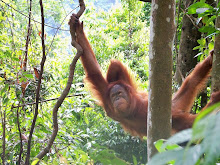
-         Protecting wild orangutans and their forest habitat

Since 2008, Q4C has raised over $400,000. You’re changing the world one quarter at a time! Click here to learn more about each of the projects listed above.
 

February 29, 2012

Leap Day the Frog Way

The real purpose of leap day may be to keep the calendar aligned with the seasons, but here at the rescue project, we’d like to believe the day is designed to honor our favorite leapers. To celebrate, we’ve put together some fun facts about frog leaping.
Jumping Silverstoneia flotator

  •       Not all frogs can leap, or even hop. The desert rain frog (Breviceps macrops) has legs that are too short to hop. Instead, it walks.
  •            Male frogs of the genus Pipa are known to defend their territory by jumping at and then wrestling other males.
  •          The New Guinea bush frog (Asterophrys turpicola) takes jump attacks one step further: before it jumps at a strange frog, it inflates itself and shows off its blue tongue.
     ·      Stumpffia tridactyla are normally slow-moving critters, but when they’re startled they can abruptly jump up to 8 inches. That doesn’t sound very far, but these little guys are less than half an inch long!
     ·      The Fuji tree frog (Platymantis vitiensis) may be the leaping stuntman of the frog world. Each time it leaps, it twists in the air—sometimes even 180 degrees—to throw predators off its trail.
     ·      The Larut torrent frog (Amolops larutensis) gets its name from a nifty leaping trick: it can jump into a fast-moving stream and back to its usual perch, the underside of a rock, without being affected by the current.
     ·      Similarly, the parachuting red-eyed leaf frog (Agalychnis saltator) gets its name because it speeds to mating opportunities by jumping from trees with finger-and toe-webbing spread wide.
     ·      The record for longest jump by an American bullfrog (Rana catesbeiana) recorded in a scientific paper is a little over 4 feet. But scientists who went to the Calaveras County Fair, which Mark Twain’s short story made famous for frog jumping, found that more than half the competitors bested that record—and one jumped more than 7 feet in one leap!
     ·      The Guinness Book of World Records doesn’t include any frogs for their leaping ability. But it does track human performance in frog jumping (jumping while holding one’s toes). There are records listed for the longest frog jump and the fastest frog jumping over 10 and 100 meters.

    In honor of leap day celebrations being coordinated globally by Amphibian Ark, the Panama Amphibian 
    Rescue and Conservation Project made this video for a frog song written by Alex Culbreth.

Post by Meghan Bartels, Panama Amphibian Rescue and Conservation Project