It’s been reported that nearly half of all
Humans are not the only ones who use vitamins to balance out their diets;
animals need a little balancing every now and then as well.
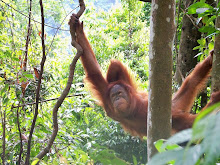
Our gorilla troop is unique. They have transitioned to a chow-free diet over the past year to a diet consisting of salad (the biggest portion of all Cheyenne Mountain Zoo animals) supplemented by several key vitamins. Below are examples of the vitamins and supplements our orangutans and gorillas receive along with a brief explanation of why they are beneficial.

- Emcelle tocopherol or vitamin E
is used as a basic supplement in the gorillas’ diets.
- Flax oil is included in the gorillas’ daily regiment to
help keep their skin healthy.
- Our silverback gorilla, Rafiki, is given cod liver oil on
a daily basis to help keep his heart healthy.
- Calcium is traditionally given to nursing moms and
orangutan females on birth control, to make sure they are getting their required
intake.
- Childrens multivitamins are given to all gorillas due
to their chow free diet. Godek, our youngest orangutan, is on the multivitamin
as well because he is a growing young animal.
- Sumagu, Godek’s mother, receives a Men's One a Day and folic acid because she is still lactating.
We use Men’s One a Day for apes
because the high levels of iron found in multivitamins formulated for
women are not the most beneficial for great apes.
- A Super B complex is given to Juju, one of our Western
Lowland gorillas, on a daily basis for normal function of her nervous
system. A while back she was curling her toes and limping, these symptoms
disappeared with the addition of Super B complex to her vitamin regiment.
- Probiotic or ultimate flora is given to Rafiki and Juju,
Western Lowland Gorillas, for inconsistent stools.
 The
apes receive the vitamins & supplements listed above in a variety of
concoctions depending on the consistency of the supplement, the animal, their preferences and
their diet restrictions. Apple sauce and sugar-free fruit drinks are
pretty helpful. Roxie, one of our Western Lowland gorillas, will only take her
vitamin E with a peanut butter sandwich. Most animals take the kids' chewable
vitamins without any issues, except Kwisha, a Western Lowland gorilla, does not
like the childrens' gummy vitamins!
The
apes receive the vitamins & supplements listed above in a variety of
concoctions depending on the consistency of the supplement, the animal, their preferences and
their diet restrictions. Apple sauce and sugar-free fruit drinks are
pretty helpful. Roxie, one of our Western Lowland gorillas, will only take her
vitamin E with a peanut butter sandwich. Most animals take the kids' chewable
vitamins without any issues, except Kwisha, a Western Lowland gorilla, does not
like the childrens' gummy vitamins!
Most zoo
animals get vitamins and minerals in their chows, biscuits and grains. Vitamins
are also included in some prepared canned foods given to the golden lion
tamarins and marmosets. The meat for our
carnivores is specially formulated with vitamins and minerals, and the frogs
and toads get their vitamins sprinkled on crickets and other insects.
 |
| Un-Coated Crickets |
 |
| Coated Crickets |
Our animals’
vitamin regiment is always changing depending on health issues, pregnancy or
possible pregnancy, if the animal is lactating, or laying eggs. Our vet staff works with our animal keepers to
form the best combination of vitamins for each individual animal based on their
current health needs.
 Please
visit out “Bear Necessities” page for more information about how you can help
our animals receive their daily dose of vitamins and supplements for as little
as $10.
Please
visit out “Bear Necessities” page for more information about how you can help
our animals receive their daily dose of vitamins and supplements for as little
as $10. 


 Posts
Posts