Welcome to Cheyenne Mountain Zoo’s official blog! From amazing animal stories to a "behind the scenes" look at daily zoo life, this is the place to get to know
Cheyenne Mountain Zoo on a more personal level.
Check back often to get In Between the Spots!

September 27, 2013

Raising Funds for Down Under Improvements

The Zoo takes pride in making continual exhibit improvements for the animals. Therefore, it’s no surprise that before the dust settled on Encounter Africa, plans to improve the Australia exhibit were already underway.

The Australia upgrade project will include some new exciting features. To start, the wallaby walk-through will be improved, and a new off-season space will be added so guests can enjoy the wallabies in an indoor winter yard.

Though they aren’t Australian, our alligators have been officially “adopted” by this part of the Zoo, and everyone hates seeing them leave for the winter. A new building for a new species of alligators for the Zoo – Chinese alligators – will keep them at the Zoo year-round. Educational elements in the new space will also explain the differences between alligators and their Australian counterparts, crocodiles.

The new, improved Budgie Buddies exhibit will still offer guests the thrills of a free-flight aviary, but the space will be remodeled and improvements will be made to ventilation and plumbing.

Throughout Australia, guest pathways will be widened, allowing for better accessibility and less crowding through the exhibit.  

In addition to the improvements to the down-under animal habitats, the renovation will allow us expand our educational outreach animals’ living quarters in the basement of our Scutes Family Gallery building.  


Now that the renovation plans have been put on paper, the next step is fundraising. Cheyenne Mountain Zoo is a non-profit that does not receive any tax support. We rely on donations to improve and build new spaces for our animals. If you would like to contribute to the future improvements of Australia at Cheyenne Mountain Zoo, contact Kelley Parker at 719.633.9925 ext. 164 or for more information on the project, visit: http://www.cmzoo.org/aboutZoo/ourFuture/australia.asp

September 5, 2013

Make your own edible vulture vomit!

Vulture vomit may seem like an unlikely topic for a blog, but it’s actually a very important aspect of vulture survival. It will also be a popular learning experience at Cheyenne Mountain Zoo’s celebration of International Vulture Awareness Day (IVAD) on Saturday, Sept. 7 from 10 a.m. – 2 p.m. in African Rift Valley. The purpose of the event is to educate guests about the plight of vultures around the world and the important role that they play in the wild.

Vultures are vital to the health of ecosystems around the world. They are scavengers – eating the wounded, sick and discarded carcasses. Their strong stomach acids are corrosive and prevent disease from spreading. During their meal time, a vulture can eat up to one quarter of its body weight in meat. That is the equivalent of a human eating 30-50 pounds of food at once! Eating so much can make flight difficult, so if threatened, they will vomit to lighten their body weights. The regurgitation may also distract predators so the vulture can escape.

During International Vulture Awareness Day, guests participate in many fun activities, but a favorite is eating vulture vomit. If you are unable to visit the Zoo during IVAD, celebrate at home by making your own vulture vomit. (Disclaimer: We do not recommend you eat 30-50 pounds at once.)

Here are two of our staff’s favorite edible vomit recipes:

Hippo-Flavored Vomit
  •  Melt a 8 oz. bag of dark chocolate baking chips
  • Smear on a baking sheet lined with parchment or waxed paper
  • Sprinkle chopped macadamia nuts onto the chocolate and lightly press in
  • Sprinkle finely chopped dried cherries onto the nuts and chocolate and lightly press in
  • Let cool, then eat and enjoy

Zebra-Flavored Vomit
  • Separately melt 4 oz. of milk (or dark) chocolate baking chips and 4 oz. of white chocolate baking chips and pour into two separate baking sheets lined with parchment or wax paper
  • Mix Rice Krispies into each type of chocolate
  • Lightly mix in the white chocolate with the milk (or dark) chocolate until it looks like stripes
  • Let cool, then eat and enjoy

September 3, 2013

Releasing Wyoming Toads into the Wild


Cheyenne Mountain Zoo is one of only nine zoological and government facilities that breed the Wyoming toad, a species classified as extinct in the wild. This year we are the only breeding facility that will be holding back tadpoles for future wild release and letting them develop safely for one year in a captive setting – a program and study being called “Head Start.”

“The goal of the Head Start program is to increase the survival rate of the Wyoming toad upon reintroduction into the wild,” Jeff Baughman, Lead Conservation Highlands Animal Keeper, said. “Tadpoles have to overcome a lot of hurdles – finding food, being preyed on, metamorphosing into toads and then hibernating before winter. Our hope is that releasing one year olds will increase the survival rate of the species in the wild since they won’t have as many hurdles.”  

Most institutions involved in the captive breeding program don’t currently have room to expand their housing facilities needed to keep extra toads for one year. Our Zoo was able to add additional housing for 200 toads for the Head Start research project. The remaining 2,244 tadpoles born at the Zoo this year were released near Laramie, WY in June. A follow up assessment of the species was made in the area in July.

“Two other professionals and I conducted the wild release of tadpoles this year,” Baughman said. “For the first time ever, we monitored the released tadpoles for two weeks. We watched for predators, dispersion and evaluated water quality in an effort to learn more about tadpole behavior – something we still don’t know much about.”

The team went back to a separate release location near Laramie, Wyoming in July to attempt to locate Wyoming toads from past years’ releases.

“Since 2008, we’ve been very methodical in our observation and counting of theindividuals found in the wild,” Baughman said. “We use the same number of people, walk the same grid and count for the same amount of time. This year we were able to locate several over-wintered toads, a few over one year old and two mature toads (over two years old). It was a more positive outcome than we’ve seen in past years.”

After June’s release and July’s observations, Baughman is excited to see if the Head Start program will yield more survivors in future assessments.

In the early ’90s, Wyoming Toads were declared extinct in the wild and only a small captive population remained. In 2004, our Zoo joined the effort to save the species through captive breeding for reintroduction to the wild. Since joining the effort, 7,359 tadpoles from our Zoo’s breeding program have been released to their native territory.The species is still classified as extinct in the wild due to the population being unable to successfully sustain themselves thus far due to ongoing challenges in their habitat.  


To read more stories from The Waterhole, or to keep up with the latest news, events, and behind the scenes happenings at the Zoo, sign up to receive e-newsletters: http://www.cmzoo.org/aboutZoo/pressBox/waterhole.asp.

August 16, 2013

Be “Beary” Aware During Outdoor Adventures!

Next weekend, Sat., Aug. 24 and Sun., Aug. 25, Cheyenne Mountain Zoo will host our 25th Annual Teddy Bear Days event from 10 a.m. – 3 p.m. During Teddy Bear Days, kids receive a special $5.25 admission price and can participate in our Teddy Bear Clinic. They can also watch demonstrations featuring our three bear species. One of the most popular demonstrations is located in Rocky Mountain Wild, where our grizzly bears, Emmett and Digger, teach guests a thing (or two) about camping with wildlife in mind!

Tips for Camping “Beary” Safely:
  • Choose an open site away from dense vegetation, natural food areas, forest cover or natural pathways.
  • Avoid messy sites and areas with signs of bears: torn-apart logs, tracks, trampled brush, scat, claw marks on trees.
  • Secure all scented items by hanging at least 10 feet off the ground and 5 feet from the tree.
  • Restrict all cooking, eating, cleaning activities and food storage to 100 feet downwind from tents.
  • Do not sleep outside of your tent or with any "smellables" in your tent, including empty food wrappers.
  • Never leave any food scraps or garbage out.
  • Wash dishes and utensils immediately - dispose of waste water downwind, 100 feet from sleeping area.
  • Always use a flashlight and extra caution when moving around at night.
  • Store all food and odorous attractants (including garbage and cooking clothes) in sealed bags or in airtight canister.
  • Bear-proof containers for campers are available through the Internet.
During Teddy Bear Days, our animal keepers also use the bear demos to talk about the important difference between encountering a grizzly bear verses a black bear in the wild. If you’re camping or hiking in Colorado, you’re likely going to be seeing black bears. The best thing to do if they become threatening is to stay big, keep your eye on the black bear, make lots of noise and, if they attack, fight back! If you encounter an aggressive grizzly bear, the best thing to do is lie down, cover your neck and do not be threatening to the grizzly at all. Animal keepers agree that whether you are hiking or camping in black bear or grizzly bear country, you should be prepared by carrying bear spray, bear bells and always be bear aware by keeping a watchful eye on your surroundings. 

Our bears can’t wait to see you at Teddy Bear Days next weekend to teach you a lot more about bear care, bear facts and bear safety, but in the meantime be “beary” safe!

Fact source: The American Bear Association

August 5, 2013

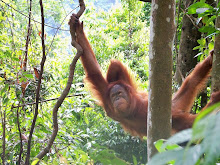
Save the lives of wild orangutans with the NEW Sustainable Palm Oil Shopping Guide App for smartphones!


You can save wild orangutans, and other endangered Asian animals affected by the palm oil crisis, by using your smartphone! This new FREE downloadable smartphone application lists more than 5,000 products whose manufacturers are certified by the Roundtable on Sustainable Palm Oil (RSPO). Purchasing products from these companies saves orangutan habitat and lives.

"Palm oil is used to make items we consume every day like food and personal care products," Dina Bredahl, Cheyenne Mountain Zoo Animal Care Manager and champion of the Zoo's palm oil awareness conservation program, said. "Purchasing products that are manufactured by RSPO member companies is the easiest thing we can do to help endangered wild orangutans." 

Palm oil comes from the fruit of the African oil palm. The majority of this edible vegetable oil is produced inBorneo and Sumatra. When harvested unsustainably it destroys critical rainforest habitat. 
One organization that seeks to implement global standards for sustainable palm oil is the RSPO. To achieve certification, members must meet stringent environmental and social criteria and protect native wildlife, like orangutans, elephants, tigers and rhinos.

In 2011, CheyenneMountain Zoo was the first zoo in the world to join the RSPO. Even before joining, the Zoo created a paper shopping guide that listed RSPO company members. The popularity of the shopping guide led the Zoo's palm oil team in the direction of creating the smartphone shopping guide application.

Make a difference for wild orangutans with three easy steps:
  1. Shop smart! Boycotting palm oil is not the solution. Instead, download the NEW Palm Oil Shopping Guide Phone App, and buy products from companies that are members of the RSPO.
  2. Speak out! If you don't see your favorite brand in the Palm Oil Shopping Guide, send the company an email to tell them how important sustainable palm oil is.
  3. Spread the word! Check out Cheyenne Mountain Zoo's full Palm Oil Resource Kit, and share it with others.