By Joanne Husby, Monkey Pavilion Keeper

This summer, I was fortunate to attend and present at the
very first International Gibbon Husbandry Conference in Greensboro, North
Carolina with Primate World keeper Mandy Hester. Gibbons are small apes native to Southeast Asia
and all species are endangered due in part to habitat destruction. Seven
countries were represented during the conference, and presentation topics
varied from health and nutrition, to conservation and research. It was uplifting to meet fellow gibbon
enthusiasts and learn what people are doing all across the globe to help
preserve these amazing animals.

One very interesting presentation was from keynote speaker
Dr. Brockelman, who has been studying gibbons since the Vietnam War! He touched on the fact some species of gibbon
may not be as monogamous as once thought.
Gibbons had been known as the only monogamous ape, but recent research
indicates this may not be true for white-cheeked gibbons. Talks were also led by
biologists from India and Indonesia, working to release gibbons back into the
wild. A zoo keeper from Lincoln Park Zoo
shared the struggles and triumphs a one-handed gibbon faces. Since Cheyenne Mountain Zoo is home to two
gibbon amputees, we know how amazing and adaptable gibbons can be. There was
also a presentation about a male siamang from Disney’s Animal Kingdom who raised
twins by himself.

The conference was a great opportunity for us to learn new
things, but also an opportunity to share some of our own gibbon knowledge and
experiences. Mandy Hester talked about
the palm oil crisis and its effect on wild gibbon populations . Thanks to Mandy’s presentation, attendees
returned to their institutions with tools to raise awareness about this international
crisis. I was able to share my
experiences: I was especially excited to talk about a fun-filled event called
Groovin’ for Gibbons. The event allowed zoo
guests of all ages to learn numerous fun facts about gibbons. For instance, what does it feel like to have
arms as long as a gibbon? Kids could
slip into a gibbon suit with arms so long they were able to hug somebody from
four feet away! The gibbon suit was a
huge hit and conference attendees couldn’t wait to try it on, too.
New at the Natural Science Center, where the conference was
held, was a breeding pair of silvery Javan gibbons. This was the first time we had seen the
species in person. It was special since Javan
gibbons are rare not only in North American zoos, but in the wild as well. We also visited North Carolina Zoo and the
Duke Lemur Center.
Our trip to North Carolina was a fruitful one. There was a constant stream of new information
for us to bring home. We are continuously improving the care we can give to these
amazing animals.

 Many of our
frequent guests are probably already familiar with Baka-keri, our adult male
Sumatran orangutan. No, he’s not the
orangutan who gives “kisses”; that’s Tujoh.
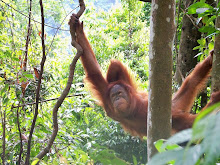
Baka is the handsome, dreadlocked guy who was a great dad to Makan and
now Godek.
Many of our
frequent guests are probably already familiar with Baka-keri, our adult male
Sumatran orangutan. No, he’s not the
orangutan who gives “kisses”; that’s Tujoh.
Baka is the handsome, dreadlocked guy who was a great dad to Makan and
now Godek.  We frequently get questions about
Baka’s name because the word “baka” means stupid in Japanese. Baka is one of our smartest orangutans and anything
but stupid. He was named at his birth
zoo, the Calgary Zoo, which follows similar naming rules as Cheyenne Mountain
Zoo. We try to give animals names from
languages native to their country of origin.
Orangutans are native to the islands of Borneo and Sumatra in
We frequently get questions about
Baka’s name because the word “baka” means stupid in Japanese. Baka is one of our smartest orangutans and anything
but stupid. He was named at his birth
zoo, the Calgary Zoo, which follows similar naming rules as Cheyenne Mountain
Zoo. We try to give animals names from
languages native to their country of origin.
Orangutans are native to the islands of Borneo and Sumatra in 


.jpg)

 Posts
Posts